Choosing scaffolding equipment in 2026 requires more than comparing prices and product photos. This buying guide introduces the non stop scaffolding manual for contractors, site managers, and careful buyers who need dependable access systems. It focuses on practical decisions, including frame dimensions, platform capacity, brace design, locking mechanisms, and material quality. A scaffold should feel stable before it carries tools, workers, or materials. Small details matter, such as clean welds, accurate pins, readable labels, and corrosion-resistant surfaces.
Reliable purchasing begins with evidence. Check manufacturer specifications, test reports, inspection records, warranty terms, and replacement-part availability. Ask whether the supplier provides assembly instructions and professional support. Local building requirements can differ, so qualified professionals should verify the equipment before use. Never treat a sales description as a complete safety assessment. It is only one part of the decision.
A low price can be attractive. It can also hide missing documentation or weak components. Consider transport, storage, inspections, and training costs over the equipment’s working life. Experienced users should examine the scaffold after delivery, especially around joints, wheels, platforms, and guardrails. New buyers may overlook these areas. I have found that simple checklists reduce rushed choices, although no checklist replaces competent judgment. This guide also acknowledges a practical limitation: product quality can vary between batches and suppliers. Therefore, readers should confirm current data directly with the manufacturer before ordering. The right system is not merely tall or affordable. It is traceable, suitable, maintainable, and appropriate for the actual worksite.
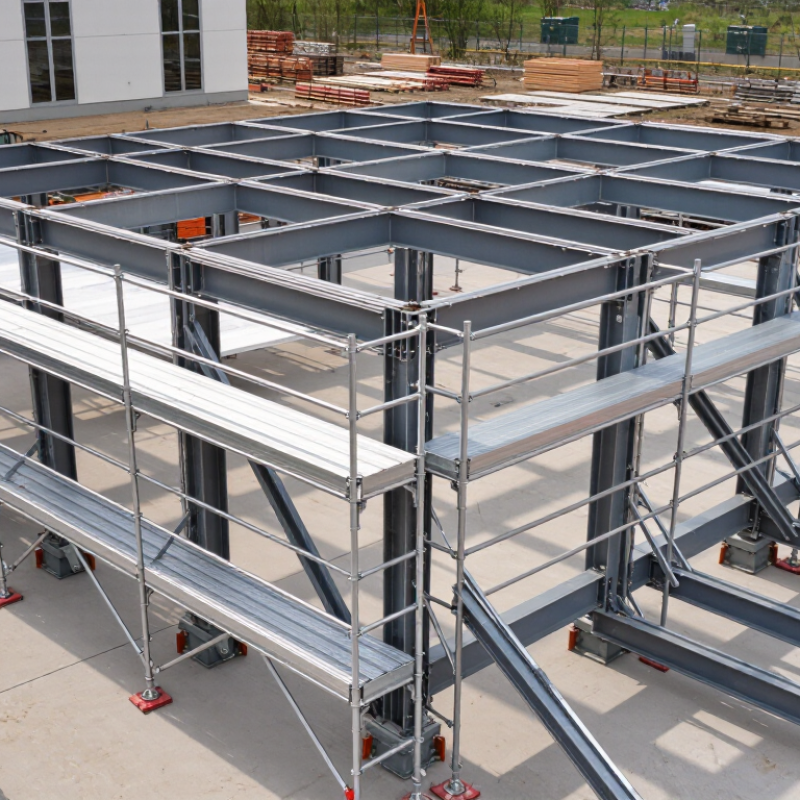
2026 Top Non Stop Scaffolding Manual Buying Guide
Scaffolding Manual Types and Their Practical Applications
Scaffolding systems vary by height, movement, load, and work location. Frame scaffolding suits repetitive exterior tasks, such as brickwork, painting, and window maintenance. Its parts are simple, but uneven ground can quickly create instability. Tube-and-clamp scaffolding offers greater flexibility around tanks, stairways, and irregular building shapes. It requires more assembly skill and careful joint inspection.
Mobile tower scaffolding works well for indoor electrical repairs, ceiling installation, and light maintenance. Lockable casters matter on smooth floors. Never move a tower while workers or loose tools remain on the platform. Suspended scaffolding supports facade cleaning and high-level finishing where ground access is limited. It needs verified suspension points, suitable fall protection, and strict load control. These details are easy to underestimate.
Tips: Match the scaffold to the task, not only the height. Check platform width, rated load, base condition, access design, and replacement-part availability. Ask for clear manuals and inspection guidance. A competent person should inspect the structure before use and after strong weather or modification. I have seen teams choose compact towers for convenience, then overload them with materials. That choice looked efficient but created avoidable risk. Manual instructions also deserve attention; they may be accurate, yet workers can misunderstand poorly illustrated steps. Practical training still matters.
Before buying a scaffolding manual, compare the technical specifications, not only the page count. A useful manual should identify permissible loads, platform dimensions, base requirements, guardrail heights, and inspection intervals. OSHA reports that about 2.3 million construction workers use scaffolds, while scaffold-related accidents still cause thousands of injuries each year. This makes clear load tables essential, not decorative. The manual should also explain compatibility with adjustable bases, frames, braces, ladders, and access gates.
Check whether the guidance follows recognized standards, such as OSHA 29 CFR 1926 Subpart L or EN 12811-1. Look for clear diagrams showing tie patterns, uneven-ground controls, wind limits, and fall-protection zones. Good instructions use practical measurements, such as minimum plank overlap and maximum spacing between platforms. They should explain inspection records and competent-person duties. A manual that says “assemble securely” is too vague. I would reject it.
Tips: Compare the revision date, load-class tables, emergency procedures, and terminology. Confirm that every drawing matches the written steps. Test the manual against a real site: a narrow passage, a wet surface, and a fully loaded platform. If the instructions become confusing there, they need improvement. Some manuals look professional but omit dismantling procedures. That is a serious weakness. Check translations carefully, too; one unclear word can change a safe sequence.
Start by identifying the work covered by the manual. A guide for light maintenance may not suit heavy construction or irregular platforms. Check whether it explains frame systems, mobile towers, suspended access, or custom structures. The scope should match your daily tasks. It should also state its revision date, authorship, and technical references. A recent manual is useful, but newer is not always better.
Read the safety sections before comparing illustrations or price. Look for clear instructions on ground checks, base plates, bracing, guardrails, access ladders, and load limits. Good manuals explain what to inspect before use and after weather changes. They should describe competent-person duties in practical language. For example, a strong checklist might require checking loose couplers, damaged boards, and uneven soil. Small details matter.
Test the manual against a real work situation. Imagine a narrow passage, wet ground, and materials stored nearby. Can a worker follow each step without guessing? If the diagrams hide connection points, choose another guide. I once trusted a detailed-looking manual that barely explained relocation procedures. That omission could create confusion. My judgment was too quick. Ask whether the manual supports local training rules and current site procedures. Keep printed pages protected from dust and moisture. Then record questions raised during toolbox discussions, because unclear instructions deserve review rather than silent acceptance.
2026 Top Non Stop Scaffolding Manual Buying Guide
A reliable scaffolding manual should explain safety standards in practical, site-ready language. Look for guidance on load capacity, platform width, guardrails, toe boards, access ladders, and fall protection. It should also require inspection by a competent person before each shift, after relocation, and after severe weather. Local regulations may differ, so buyers must verify the current requirements for their work area.
Materials deserve close attention. Galvanized steel offers strength and corrosion resistance, while aluminum reduces weight but may require stricter load controls. Check tube thickness, weld quality, frame alignment, base plates, locking pins, and adjustable jacks. The manual should identify approved components and warn against mixing incompatible parts. Small defects matter. A bent pin can become a serious failure point.
Good documentation includes assembly drawings, load tables, inspection forms, and clear replacement criteria. It should explain how to control ground settlement, overhead hazards, wind exposure, and unauthorized alterations. Manuals that rely only on general warnings are weak. A checklist cannot replace judgment. In field practice, even experienced crews can overlook a missing toe board during a rushed change. That deserves honest review. Buyers should also confirm revision dates, training guidance, emergency procedures, and traceable records for every inspection.
| Buying Dimension | Recommended Requirement | Verified Technical Data | Essential Compliance Check | Priority |
|---|---|---|---|---|
| Applicable legal framework | Select the standard that applies at the installation location. | Common frameworks include OSHA 29 CFR 1926 Subpart L in the United States, EN 12811-1 for temporary works equipment in Europe, and AS/NZS 1576.1 for Australia and New Zealand. | Confirm the project jurisdiction, edition, local amendments, and whether a licensed or competent person must approve the design. | Critical |
| Load classification | Match the scaffold to workers, tools, stored materials, and environmental loads. | EN 12811-1 uses uniformly distributed service load classes from 0.75 kN/m² to 6.00 kN/m². OSHA requires scaffolds to support their own weight and at least four times the maximum intended load. | Obtain design calculations or manufacturer load tables; never infer capacity from platform appearance or tube diameter alone. | Critical |
| Primary material | Use structural-grade steel or aluminium with traceable material documentation. | Steel provides high stiffness and impact resistance; aluminium offers lower mass but generally requires careful control of deflection, connections, and corrosion exposure. | Request material certificates, alloy or steel grade, yield-strength data, weld procedure information, and batch traceability. | Critical |
| Corrosion protection | Choose protection suitable for moisture, salt, chemicals, and expected service life. | Hot-dip galvanizing is commonly specified for steel components; coating performance should be assessed against the intended environment rather than by appearance alone. | Check coating continuity, damaged areas, corrosion allowance, inspection intervals, and compatibility between dissimilar metals. | High |
| Platform decking | Use fully supported, slip-resistant platforms with secure retention. | Typical options include steel, aluminium, and engineered timber planks. Platform components must be compatible with the intended span and rated load. | Inspect for cracks, distortion, excessive wear, slippery contamination, uplift risk, and gaps that could create a fall or trip hazard. | High |
| Guardrails and toe boards | Provide complete edge protection at every exposed working level. | Under OSHA, supported scaffold guardrails generally have a top edge between 38 and 45 inches above the platform; toe boards are generally at least 3.5 inches high where required. | Verify local dimensional requirements, intermediate rails, end protection, toe-board continuity, and secure locking of all components. | Critical |
| Access and egress | Provide safe, unobstructed access designed for the scaffold configuration. | Acceptable systems may include internal stair towers, ladders, or integral access frames, subject to the governing standard and scaffold height. | Check ladder clearance, landing gates, stair dimensions, access openings, and protection against falling through platform hatches. | Critical |
| Base support and leveling | Transfer loads to a stable, adequately supported foundation. | Adjustable base jacks, sole boards, base plates, and screw legs are commonly used, but the allowable adjustment range and ground bearing capacity must be established by design. | Inspect for settlement, soft ground, standing water, unapproved stacking, excessive jack extension, and contact with unstable surfaces. | Critical |
| Bracing and ties | Control sway, buckling, and overturning throughout erection and use. | Brace and tie spacing depends on scaffold geometry, height, width, wind exposure, sheeting, eccentric loads, and the approved engineering design. | Confirm tie pattern, anchor capacity, brace orientation, tie removal controls, and additional design for wind or debris netting. | Critical |
| Component connections | Use positive locking connections designed for repeated assembly. | Common connection types include couplers, rosettes, frames, pins, clips, and locking ledgers. Components from different systems are not automatically interchangeable. | Verify compatibility, locking engagement, allowable loads, dimensional tolerances, missing parts, deformation, and unauthorized modifications. | Critical |
| Wind and weather limits | Define operating limits before erection and throughout the work shift. | Wind pressure is affected by height, exposure, geometry, sheeting, netting, and surrounding structures; a single universal wind-speed limit is not suitable for every scaffold. | Document wind criteria, storm procedures, ice or snow controls, electrical-clearance requirements, and stop-work authority. | Critical |
| Inspection program | Inspect before first use, after alteration or impact, and after events that could affect integrity. | OSHA requires scaffolds and scaffold components to be inspected by a competent person before each work shift and after an occurrence that could affect structural integrity. | Maintain inspection records, defect tags, repair history, component quarantine procedures, and a clear release-to-use process. | Critical |
| Training and competence | Ensure users, erectors, and inspectors receive role-specific training. | OSHA distinguishes training for scaffold users, erectors, dismantlers, and inspectors; requirements vary by role and jurisdiction. | Check documented training, rescue arrangements, fall-protection instruction, manual-handling controls, and language accessibility. | High |
| Documentation package | Buy only when the technical file is complete and current. | A useful package includes assembly instructions, load tables, drawings, maintenance guidance, inspection criteria, certificates, and limitations of use. | Confirm document revision, language, component identification, design assumptions, engineering sign-off, and availability at the worksite. | High |
| Procurement acceptance test | Inspect a representative delivery before placing the system into service. | Acceptance should cover dimensions, straightness, welds, coatings, labels, connection fit, platform condition, and supplied quantities. | Record nonconformities, segregate damaged parts, verify corrective actions, and approve only components matching the design documentation. | High |
Reference basis: OSHA 29 CFR 1926 Subpart L, EN 12811-1, EN 12810-1, and AS/NZS 1576.1. Always verify the current edition and local legal requirements before purchase, erection, alteration, or use.
2026 Top Non Stop Scaffolding Manual Buying Guide
Installation, Maintenance, and Storage Requirements
Continuous scaffolding use demands disciplined installation, not rushed assembly. OSHA’s Scaffolding eTool reports that about 2.3 million construction workers use scaffolds annually. That exposure makes small setup errors significant. Inspect the ground first. It should be firm, level, and free from standing water. Install base plates, bracing, guardrails, and safe access according to the manufacturer’s manual. A competent person should verify plumb alignment and platform loading before work begins. Keep tools away from platform edges.
Maintenance must continue during every shift. Check couplers, pins, boards, wheels, and locking devices for distortion, corrosion, or missing parts. The UK Health and Safety Executive recorded 51 fatal injuries in construction during 2023/24, with falls remaining a major risk category. That figure is not caused by scaffolding alone, but it reinforces the need for repeated inspection. After high winds, impact, alteration, or long inactivity, inspect the structure again. Do not rely only on yesterday’s checklist.
Storage is often treated as an afterthought. It should not be. Clean components before storage, then dry them fully to prevent trapped moisture and rust. Stack frames on level supports, with smaller fittings in labeled containers. Avoid throwing tubes into loose piles; bent ends may remain unnoticed. In field reviews, paperwork sometimes looked perfect while one damaged caster was hidden underneath. That is an uncomfortable reminder: records support safety, but careful eyes still matter.
Installation, maintenance, and storage decisions should begin with the scaffold’s intended working load. The chart below presents the six service load classes defined in EN 12811-1, expressed as uniformly distributed loads for working areas.
Buying and handling guidance: Select a load class that matches the planned materials, workers, tools, and stored components. During installation, use the manufacturer’s instructions and verify foundations, bracing, ties, platforms, guardrails, and access systems. Inspect scaffolding before first use, after alteration, and after events that could affect stability. Store components off the ground in a dry, ventilated area, separated by type, and remove bent, cracked, corroded, or otherwise damaged parts from service.