What Is the Best Type of EZ Scaffolding from China?
Choosing the best ez scaffolding from China requires more than comparing prices and product photographs. The right system depends on project height, load requirements, site access, weather exposure, and assembly experience. Ringlock scaffolding often suits complex construction sites because its rosettes support flexible connections. Frame scaffolding may work better for smaller building repairs and straightforward wall access. Cuplock systems can offer strong vertical support, but their handling weight deserves attention.
Practical experience matters here. A reliable supplier should provide material certificates, welding inspection records, dimensional drawings, and clear load information. Hot-dip galvanized steel can resist outdoor corrosion, especially around wet foundations or coastal projects. However, coating quality varies. A bright surface does not automatically prove long-term durability. Buyers should request sample checks and independent verification when the project risk is high.
Safety remains the deciding factor. Confirm that the design follows applicable local requirements and recognized standards, such as EN 12810 and EN 12811 where relevant. Check platform width, guardrails, base jacks, access ladders, and anchoring details. One missing component can affect the entire scaffold arrangement. Supplier reputation also deserves careful review, including factory audits, production photographs, export records, and after-sales support.
There is no universal winner.
This guide compares common ez scaffolding types from China through a practical, evidence-based lens. It considers strength, corrosion resistance, installation speed, compatibility, certification, and total ownership cost. Some conclusions may change after site testing, because specifications alone cannot reveal every handling problem. A careful decision combines engineering review, supplier verification, and real project conditions.
EZ Scaffolding: Definition, Structure, and Main Applications
What Is the Best Type of EZ Scaffolding from China?
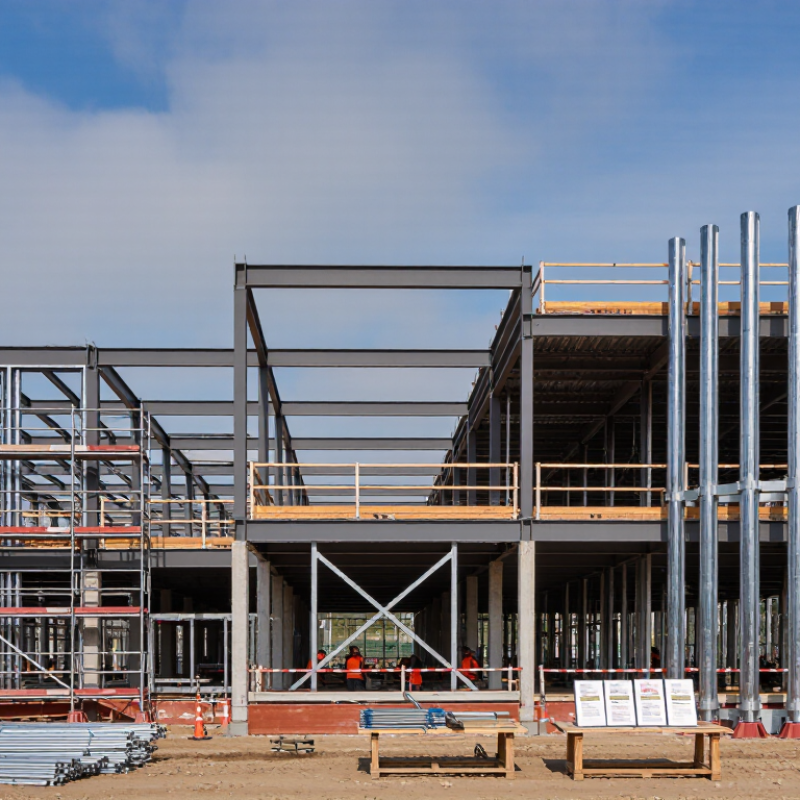
EZ scaffolding generally means a modular system designed for quick assembly, adjustment, and repeated use. Its basic structure includes standards, ledgers, braces, decks, base jacks, guardrails, and access ladders. Frame systems suit straight façades and simple indoor work. Ringlock or cuplock systems handle irregular elevations and heavier loading more effectively. The best choice depends on height, platform load, ground conditions, and assembly speed. “Easy” does not mean risk-free.
EN 12811-1 defines performance requirements for temporary works equipment, including strength, serviceability, and platform access. The International Labour Organization reports nearly three million work-related deaths and about 395 million non-fatal injuries each year. These figures show why structural planning matters. For imported systems, request material certificates, load tables, welding inspection records, and corrosion-protection details. Check tube thickness with calibrated tools. Do not guess. A small dimensional error can affect bracing alignment and platform stability. Chinese manufacturing can offer competitive modular production, but documentation quality may vary between suppliers. That is where buyers must remain skeptical.
Tips: Select a system after a site assessment, not from photographs. Confirm the intended duty class and maximum bay load. Inspect every component for bent tubes, damaged pins, and unstable welds. Train erectors to follow the supplier’s method statement and local requirements. Recheck foundations after rain or settlement. Fit matters. Even a well-made scaffold can fail when the base is uneven, bracing is missing, or unauthorized alterations are added.
What Is the Best Type of EZ Scaffolding from China?
EZ Scaffolding: Definition, Structure, and Main Applications
The most suitable EZ scaffolding type depends on the required working load. The chart uses the six uniformly distributed load classes defined in EN 12811-1, ranging from light-duty inspection and finishing work to heavy-duty masonry and material-intensive construction. Higher load classes require appropriate design, bracing, foundations, platforms, and professional installation.
Key Types of EZ Scaffolding Manufactured in China
What Is the Best Type of EZ Scaffolding from China?
Key Types of EZ Scaffolding Manufactured in China
Chinese manufacturers commonly produce ringlock, cuplock, frame, tube-and-clamp, and mobile tower scaffolding. Ringlock systems use rosettes and wedge connections. They suit industrial platforms and projects requiring repeated height changes. Cuplock scaffolding uses fixed cup joints. It offers fast assembly with fewer loose parts. Frame scaffolding remains practical for exterior walls, plastering, and moderate loads. It is usually simpler to train workers on.
Tube-and-clamp systems provide strong flexibility around tanks, bridges, and irregular structures. However, installation takes longer. Mobile towers add casters and adjustable platforms. They support short-duration indoor tasks, but only on level surfaces. Aluminum versions reduce lifting effort, although their higher price needs careful evaluation. The best type depends on load class, working height, ground conditions, and local standards.
Safety data deserves attention. The U.S. Occupational Safety and Health Administration states that scaffolds serve about 2.3 million construction workers annually. Its estimates also link scaffolding hazards with roughly 4,500 injuries and 50 deaths each year. These figures make joint locking, base plates, guardrails, and inspection records more important than appearance. China produced about 1,005.1 million tonnes of crude steel in 2024, according to the World Steel Association. That capacity supports broad manufacturing, but it does not prove every product is reliable. I would request material certificates, weld inspection records, load-test results, and traceable batch numbers. A cheaper frame can look efficient. It may not remain stable after repeated relocation. No catalog replaces a competent site inspection.
How to Compare Materials, Load Capacity, and Safety Features
Choosing the best type of EZ scaffolding from China starts with material verification. Steel frames usually provide strong impact resistance and stable performance. Aluminum systems are lighter, but they may flex more under heavy loads. Ask for material certificates, weld inspection records, coating details, and dimensional tolerances. Do not trust a polished catalog alone. A sample joint should fit firmly without forcing.
Load capacity requires more than one impressive number. Compare the rated load per bay, platform size, working height, and duty classification. Include workers, tools, stored materials, wind pressure, and the scaffold’s own weight. Ask for test results for the complete configuration, not isolated components. A 2.0-meter platform can behave differently after adding extra levels. More capacity is not automatically safer. A qualified structural professional should verify the design for your site.
Safety features deserve close physical inspection. Look for guardrails, toe boards, locking pins, anti-slip decks, stable base plates, and reliable access ladders. Diagonal bracing and secure ties are essential on taller structures. Request clear assembly drawings, inspection records, and maintenance guidance. When the shipment arrives, check for bent tubes, sharp welds, missing pins, and damaged finishes. My own judgment can be incomplete. That weakness matters. Independent inspection is wise, especially before workers climb the first platform.
Choosing the Best EZ Scaffolding for Different Construction Tasks
What Is the Best Type of EZ Scaffolding from China?
Choosing the Best EZ Scaffolding for Different Construction Tasks
The best EZ scaffolding depends on height, load, access, and ground conditions. For interior finishing, lightweight frame scaffolding allows fast movement through narrow rooms. Its cross braces improve stability, while adjustable casters support frequent repositioning. For façade work, ring-lock or cup-lock systems offer stronger load distribution and flexible platform levels. They suit masonry, plastering, and material storage. Heavy stone work needs a higher load class, not simply more frames.
Safety should guide every selection. The U.S. Bureau of Labor Statistics recorded 1,069 construction deaths in 2022. Falls to lower levels caused 395 of them. OSHA also reports thousands of scaffold-related injuries annually. These figures make guardrails, toe boards, safe access, and level bases practical necessities. A platform should match the intended load under EN 12811-1 principles, with documented testing and inspection records from the supplier.
Chinese-made scaffolding can be competitive, but low price alone is a weak buying standard. Ask for material certificates, weld inspection results, load tests, and traceable production records. Check whether locking pins fit smoothly on site. They should not need force. For coastal projects, galvanized surfaces may resist corrosion better than painted steel. Still, galvanizing quality can vary. I would inspect sample components before placing a large order. That judgment is imperfect. Site conditions often change. A system selected for speed may need extra bracing when wind, uneven soil, or heavier tools appear.
Quality Standards, Customization, and Supplier Evaluation Criteria
What Is the Best Type of EZ Scaffolding from China?
The best EZ scaffolding depends on site load, erection speed, and local regulations. Quality begins with engineering, not appearance. EN 12811-1 defines performance requirements for temporary works equipment, including stability, access, and load-bearing behavior. For Chinese production, request material certificates, welding procedures, dimensional records, and coating results. Ask whether steel heat numbers remain traceable through production. A clean warehouse does not prove reliable fabrication.
Customization should follow the worksite, not only a buyer’s drawing. Suppliers can adjust bay length, platform height, guardrails, access ladders, caster systems, and surface treatment. However, every change may affect structural calculations. The U.S. Bureau of Labor Statistics recorded 1,075 fatal construction injuries in 2023. Falls remain a major hazard. Therefore, platform locking, base adjustment, bracing, and guardrail design deserve close review. ISO 9001 certification helps, but it is not a substitute for product testing or factory inspection. That distinction is often overlooked.
Tips: Request a sample unit before bulk production. Check tube thickness with calibrated tools. Review third-party load-test reports. Compare drawings with the delivered parts. Inspect welds, pins, frames, and caster brakes. Ask for replacement-part lead times. I would also audit one finished shipment, because documents can be accurate while production still varies. That is an uncomfortable risk, but a real one.