Top Non Stop Crank Up Scaffolding Suppliers Worldwide
Choosing reliable suppliers for non stop crank up scaffolding requires more than comparing prices. Contractors need equipment that performs steadily on active construction sites. Smooth height adjustment, stable platforms, and durable steel components can affect daily productivity and worker confidence.
This guide examines top non stop crank up scaffolding suppliers worldwide through practical criteria. These include manufacturing experience, product testing, load capacity, surface protection, replacement parts, and technical support. Supplier transparency also matters. Clear specifications, traceable materials, and responsive communication help buyers reduce avoidable risks.
Real projects reveal important details. A crank handle should turn without excessive resistance. Locking systems should feel secure, even after repeated use. Wheels, braces, and frames must arrive properly protected, not scratched or poorly packed. Small weaknesses can become expensive delays.
No supplier is perfect. Some companies offer strong engineering but limited regional service. Others provide fast delivery but less documentation. That trade-off deserves attention. Buyers should verify certifications, inspection records, warranty terms, and local compliance requirements before placing an order.
This overview is designed for contractors, rental companies, distributors, and procurement teams. It separates marketing language from evidence where possible. Supplier rankings can change over time. Market conditions, factory performance, and after-sales quality still require independent review.
Safety remains central. Proper assembly, trained operators, routine inspection, and suitable ground conditions are essential. A reputable supplier supports these practices with manuals and practical guidance. The right choice is not simply the cheapest option. It is the supplier that delivers dependable equipment, useful support, and clear accountability across the project lifecycle.
What Non-Stop Crank-Up Scaffolding Is and How It Works
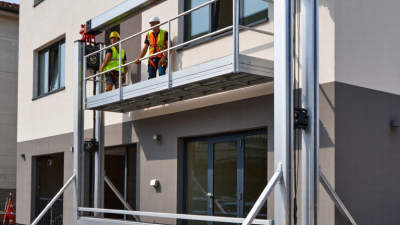
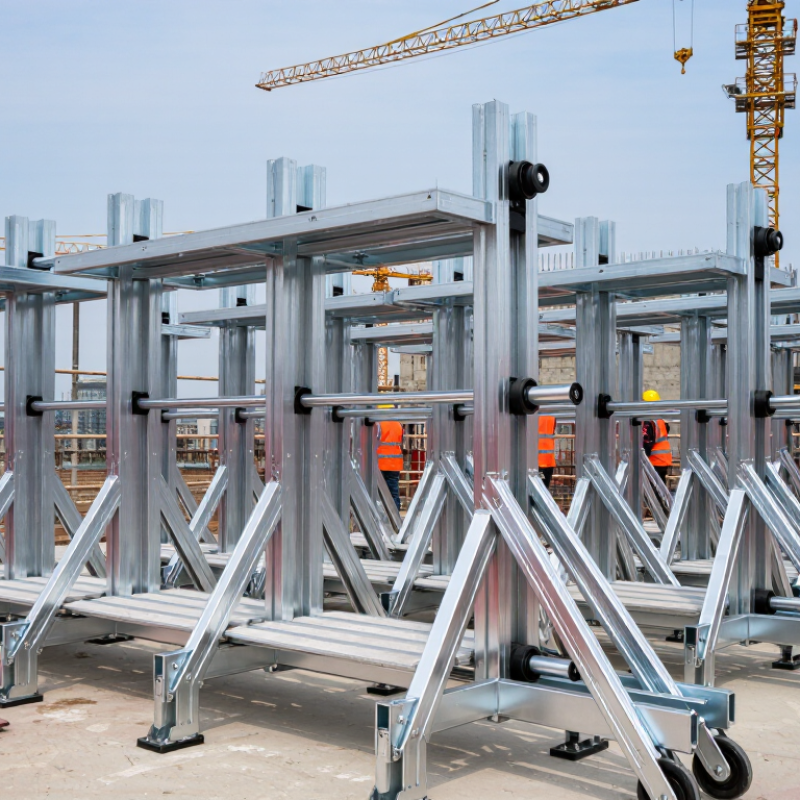
Non-stop crank-up scaffolding is a height-adjustable work platform designed to reduce repeated dismantling. Instead of rebuilding the frame, workers turn crank handles connected to screw jacks or lifting mechanisms. The platform rises evenly when the jacks operate together. Locking pins, braces, and stabilizers then hold the selected height. The phrase “non-stop” can mislead. It usually means continuous adjustment, not unlimited operation without checks.
On a typical site, technicians place the scaffold on firm, level ground and engage the wheel brakes. They extend stabilizer legs before raising the deck. Each crank should move smoothly and at the same pace. A small height difference can twist the platform or overload one support. Workers also check the rated load, guardrails, access ladder, and base condition before use. Tools should stay secured, especially when the deck is several metres above ground.
Practical reliability depends on maintenance, not appearance. Threads need cleaning, moving parts need suitable lubrication, and damaged pins require replacement. Wind, uneven soil, and concentrated materials can change the scaffold’s behaviour. A common mistake is trusting the crank alone. It is only one part of the system. Experienced crews record inspections and stop adjustment when resistance, noise, or visible leaning appears. Some sites may still need conventional assembly for complex layouts. That limitation deserves honest consideration.
Key Criteria for Evaluating Worldwide Scaffolding Suppliers
Choosing a worldwide scaffolding supplier requires more than comparing prices. For non-stop crank-up scaffolding, inspect lifting capacity, working height, adjustment speed, and frame stability. Ask for load charts, material grades, weld inspection records, and current test certificates. Documents matter. Yet paperwork alone is not proof. Request a live product demonstration, preferably with a loaded platform, before signing a large order.
Experienced suppliers explain how their systems behave on uneven ground, during repeated lifting cycles, and under changing weather. Look for clear maintenance intervals, replaceable components, spare-part availability, and practical training. Ask who answers after delivery. A dependable technical team should provide installation guidance, inspection templates, and prompt responses across time zones. Regional compliance also deserves careful review. Confirm that design, labeling, electrical components, and safety instructions match the destination market.
Supplier reliability becomes visible in small details: serial-number tracking, protective packaging, realistic lead times, and honest limits. References from contractors using the equipment daily can reveal more than polished sales material. Still, references can be selective. Speak with at least two users and ask about breakdowns, delivery delays, and claim handling. A low quote may conceal weak support or frequent downtime. I would score technical evidence, service capacity, and communication separately, then revisit the scores after a factory or warehouse visit. That final review can expose assumptions I missed.
Top Non-Stop Crank-Up Scaffolding Suppliers Worldwide
Key Criteria for Evaluating Worldwide Scaffolding Suppliers
A practical supplier comparison should begin with verified load capacity. The chart shows the uniformly distributed working-platform loads defined by EN 12811-1 load classes, expressed in kilonewtons per square metre (kN/m²). Higher classes support greater planned working loads, but selection must also consider compliance documentation, system compatibility, inspection procedures, material traceability, delivery capability, and technical support.
Reference: EN 12811-1, Temporary Works Equipment — Scaffolds — Performance Requirements and General Design.
Leading Non-Stop Crank-Up Scaffolding Suppliers by Region
Non-Stop Crank-Up Scaffolding Suppliers by Region
Regional demand is reshaping the crank-up scaffolding supply chain. Grand View Research estimates that the global scaffolding market will maintain steady growth through 2030, supported by urban construction, industrial maintenance, and infrastructure renewal. Suppliers serving North America often emphasize certified components, rental availability, and clear load documentation. Buyers commonly request adjustable platforms, galvanized frames, and quick replacement parts.
Asia-Pacific remains a major manufacturing and construction center. Reports from Mordor Intelligence identify the region as a strong growth market, driven by residential development and transport projects. Suppliers there often provide large production capacity and flexible configurations. Quality can vary between factories, however. Independent inspections remain essential.
Europe places greater emphasis on worker protection, traceability, and equipment inspection records. Regional suppliers usually focus on modular systems, lower transport weight, and compliance documentation. In the Middle East, suppliers adapt designs for heat, dust, and large commercial sites. Crank handles must remain usable after repeated exposure to harsh conditions. Small details matter.
No regional ranking is completely objective. Pricing, delivery distance, training, and after-sales support can change the best choice. I may be overgeneralizing. A reliable evaluation should compare test certificates, platform stability, spare-part lead times, and field experience. TÜV and ISO references can strengthen credibility, but they do not replace site-specific inspection. The safest supplier is often the one that explains limitations clearly.
Safety Standards, Certifications, and Product Quality
Choosing non-stop crank-up scaffolding suppliers requires more than comparing prices or lifting speed. Safety documentation must come first. OSHA estimates that scaffolds support 2.3 million construction workers, while scaffold-related incidents cause about 4,500 injuries and 50 deaths annually in the United States. These figures make supplier verification practical, not administrative.
Reliable suppliers should provide designs aligned with EN 12811-1 or equivalent regional standards. Ask for load-class calculations, stability checks, weld inspection records, and corrosion protection details. ISO 9001 certification can indicate controlled production processes, but it does not prove every scaffold is safe. Third-party testing matters. So does traceability. Each crank, frame, pin, and platform should carry identifiable batch information. Small details matter on site.
Field checks reveal problems that certificates may miss. Threads can arrive with damaged zinc coating. Locking pins may fit loosely. Labels can fade after repeated exposure. A responsible supplier explains inspection intervals, replacement limits, and emergency procedures clearly. The Health and Safety Executive continues to emphasize competent assembly, inspection, and maintenance throughout a scaffold’s service life. Do not accept vague claims. Request current reports, not scanned documents from years ago. One weakness remains: international certification systems are not perfectly uniform, so buyers must verify local acceptance before ordering.