Elevating Scaffolding – Masonry Scaffolding – Motorized Scaffolding

Elevating Scaffolding – Masonry Scaffolding – Motorized Scaffolding
7 Best EZ Scaffold Crank Up Systems for Global Buyers
An ez scaffold crank up system can make elevated work more controlled, but the right choice depends on the job, crew, and site conditions. Buyers should compare platform height, rated capacity, crank operation, frame stability, guardrails, and replacement-part availability. Small differences matter. A handle that turns smoothly under load can save time; a clear load label can prevent costly guesswork.
Safety deserves equal weight. OSHA’s scaffold safety guidance estimates that about 2.3 million construction workers use scaffolds in the United States, and that scaffold-related incidents could cause roughly 4,500 injuries and 50 deaths annually. These figures are U.S.-specific, not global estimates, but they show why sound equipment selection and training matter. A machine’s advertised capacity is not a substitute for checking the manufacturer’s instructions, inspecting components, and confirming that the setup suits the work surface.
This guide reviews seven crank-up scaffold systems for buyers comparing products across markets. It focuses on practical specifications, usability, durability, and support—not unsupported “best for everyone” claims. Some product details may look impressive on paper. Verify them. International buyers should also confirm applicable local standards, available service, shipping arrangements, and spare-part access before ordering. No single system fits every site; that is worth admitting.
What EZ Scaffold Crank-Up Systems Are and How They Work
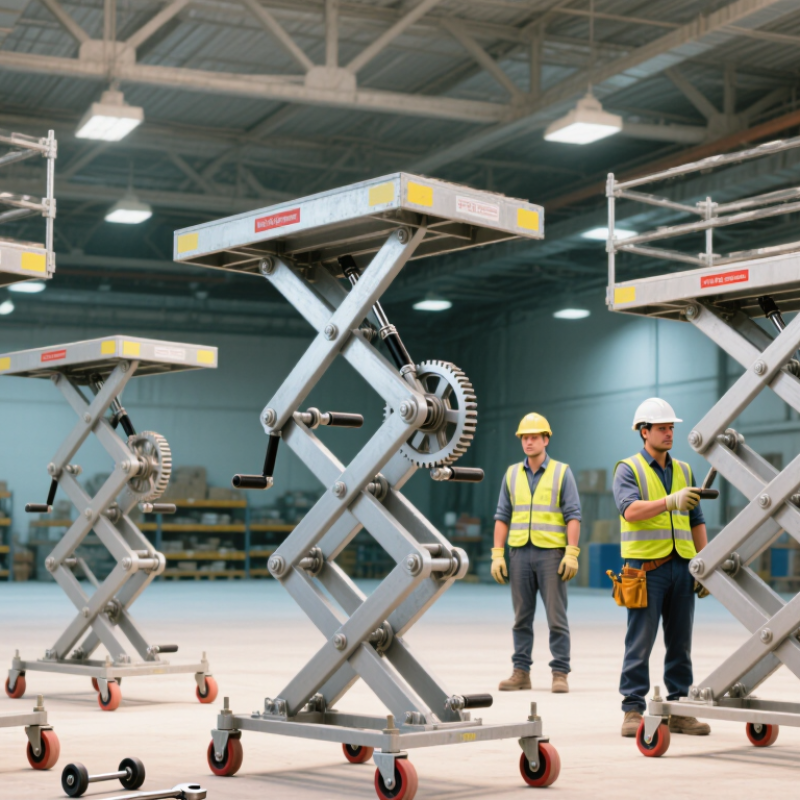
An EZ scaffold crank-up system is a temporary work platform raised or lowered by turning mechanical cranks. Its frame, uprights, and platform support workers and materials above ground. The operator turns the cranks to lift the platform in controlled increments. Depending on the system, gears, cables, or screw mechanisms transfer that movement. Brakes, locking devices, and stable bases help keep the platform in position. Exact components vary, so the manufacturer’s instructions matter.
Before use, workers check the ground, frame connections, platform, and lifting mechanisms. The scaffold must stay level as it rises; uneven cranking can tilt the platform. OSHA’s Scaffolding eTool cites estimates that proper scaffold protection could prevent about 4,500 injuries and 50 deaths annually. These figures are estimates, not a prediction for any single job. The lesson is practical: a smooth crank does not prove the setup is safe. Small defects can be easy to miss.
Tips: Inspect both sides before raising the platform. Keep people and loose tools clear of moving parts. Confirm the rated load includes workers, equipment, and materials. Stop if the frame shifts or a crank feels unusually stiff. That extra check can feel slow. It is still worth doing.
7 Best EZ Scaffold Crank Up Systems for Global Buyers - What EZ Scaffold Crank-Up Systems Are and How They Work
Crank-up scaffold systems use a hand-operated crank and a mechanical lifting arrangement to raise or lower a work platform. The options below are system types, not brand-specific products. Exact platform dimensions, working loads, lift height, and operating procedures depend on the model and must be confirmed in its manufacturer documentation.
| System type | Typical lifting arrangement | Best suited to | Main advantage | Key limitation or check | Buyer evaluation |
|---|---|---|---|---|---|
| 1. Single-mast manual crank platform | A hand crank operates a winch or geared lifting mechanism along one supporting mast. | Compact, localized maintenance where the rated platform size and load are appropriate. | Relatively compact arrangement with straightforward manual height adjustment. | Confirm rated capacity, mast stability, anchorage requirements, and permitted platform configuration. | Check the operating manual, load rating, inspection requirements, and availability of compatible parts. |
| 2. Twin-mast manual crank platform | A platform is guided by two masts; the lift mechanism may be manually operated, with synchronization requirements set by the design. | Wider work areas or tasks needing a more evenly supported platform. | Two support lines can provide a broader platform arrangement than a single-mast design. | Follow the specified leveling and synchronization procedure; uneven lifting can create hazards. | Verify allowable platform width, rated load distribution, mast ties, and setup instructions. |
| 3. Geared hand-winch system | A crank turns a geared winch that winds or pays out a lifting line, where the system is designed for that arrangement. | Applications needing controlled manual movement and a defined lifting path. | Gearing can make lifting more controlled than direct manual movement. | Inspect the winch, line, attachment points, and any brake or load-holding device as instructed. | Confirm the winch is approved for personnel-platform use when applicable; a material hoist is not automatically suitable. |
| 4. Rack-and-pinion crank system | A crank drives a pinion gear along a fixed rack to move the platform, if specified by the system design. | Repeated positioning where the equipment is engineered for regular guided travel. | Positive gear engagement can provide a defined travel path. | Keep rack, pinion, guides, and safety devices maintained according to the manufacturer’s schedule. | Review inspection access, wear limits, service support, and required operator training. |
| 5. Crank-adjustable rolling scaffold tower | Height-adjustable components are operated by a crank; the tower’s wheels and stabilizers are configured as specified for use. | Indoor or level-surface work where mobility between work positions is important. | Can combine height adjustment with movement between locations when permitted by the instructions. | Lock casters and observe restrictions on moving a tower while occupied; many configurations prohibit it. | Check floor condition, caster locks, guardrails, stabilizers, and movement rules for the exact model. |
| 6. Crank-up work platform with outrigger support | A manually raised platform is paired with outriggers or stabilizers where required by the equipment design. | Work areas where the specified stabilizing footprint can be safely established. | Stabilizing components can help support the intended setup when correctly installed. | Outriggers do not replace correct ground assessment, setup, or compliance with load limits. | Confirm required base dimensions, ground-bearing conditions, tie-in instructions, and setup clearances. |
| 7. Modular crank-up scaffold system | Compatible scaffold components form a platform and support structure, with a specified crank-operated lifting unit. | Projects needing configurable platform layouts within a documented system. | A modular design may accommodate different layouts using approved components. | Mixing incompatible parts or changing the approved configuration can compromise safety and rating. | Request component compatibility lists, assembly drawings, load tables, and local compliance documentation. |
Safety note: “Crank-up scaffold” is not a single standardized equipment design. Do not infer a safe working load, maximum height, or personnel-lifting approval from the system type alone. Select and operate equipment only within its documented rating and applicable local regulations, and use competent personnel for assembly, inspection, and operation.
Related Posts
-
2026 Best Types of Crank Scaffold for Global Buyers?
-
How to Choose the Best Crank Up Scaffolding in China?
-

10 Best Crank Up Scaffolding Suppliers for Global Buyers?
-
China Top Crank Up Scaffolding Manufacturers and Suppliers
-
What Is the Best Crank Up Scaffolding in 2026?
-
How to Crank Up Scaffolding Safely and Efficiently