Elevating Scaffolding – Masonry Scaffolding – Motorized Scaffolding

Elevating Scaffolding – Masonry Scaffolding – Motorized Scaffolding
Why Choose a Crank Scaffold for Construction Projects?
Choosing the right access system can shape a project’s safety, pace, and daily workload. A crank scaffold offers adjustable working height for masonry, cladding, painting, and maintenance tasks. Its platform can rise smoothly as crews move upward. That reduces repeated dismantling and repositioning on busy sites.
Experienced site supervisors value the practical control it provides. Workers can keep materials near waist height instead of reaching from unstable positions. A level platform also helps teams handle tools, sealant, blocks, or panels with fewer interruptions. In real projects, those small improvements can protect energy and productivity. They can also make inspections easier.
The system is not a perfect answer. Setup still demands trained personnel, careful leveling, and routine checks. Ground conditions, wind exposure, load limits, and nearby structures must be assessed before use. A crank scaffold may also feel slower to install than a simpler fixed platform on a small job. That trade-off deserves honest consideration. Manufacturer instructions and applicable workplace requirements should guide every decision. When selected for the right task, this scaffold combines controlled height adjustment with a more organized work area. Its value comes from disciplined use, not from the equipment alone.
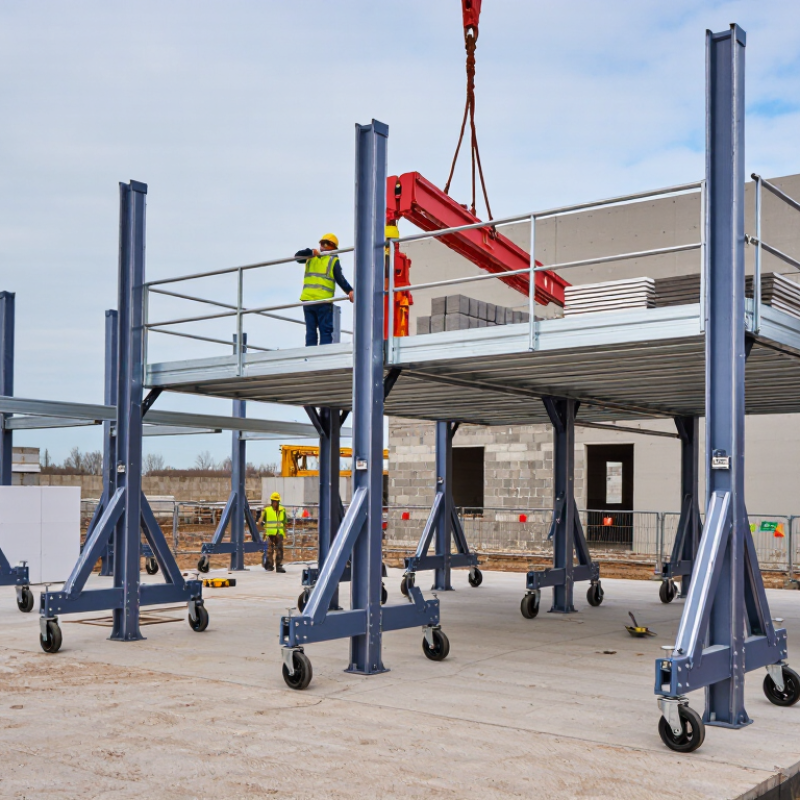
Crank Scaffold: Definition, Structure, and Core Components
Why Choose a Crank Scaffold for Construction Projects?
A crank scaffold is an adjustable work platform that changes height through a hand-operated crank, screw jack, or mechanical lifting system. Its structure usually includes vertical frames, cross braces, a working deck, guardrails, toe boards, and locking casters. Outriggers may widen the base and improve stability. The crank mechanism connects to synchronized lifting points, helping the platform rise evenly. Small details matter. A loose pin can create serious movement.
On active construction sites, height adjustment can reduce repeated scaffold assembly and improve worker positioning. The platform can follow changing wall elevations, masonry courses, or installation zones. OSHA estimates that about 2.3 million construction workers use scaffolds, while scaffold-related accidents cause approximately 4,500 injuries and 50 deaths each year. These figures explain why component design and daily inspection deserve attention.
A safe setup requires checking the manufacturer’s load rating, deck condition, wheel locks, braces, guardrails, and crank operation. OSHA guidance also requires protection against falls and falling objects where applicable. Never treat the crank as a substitute for proper stabilization. The system is not flawless. Uneven ground, overloaded decks, or rushed adjustments can defeat its advantages. In practice, a competent person should inspect the scaffold before each shift and after relocation. Height flexibility helps, but disciplined use matters more.
Why Choose a Crank Scaffold for Construction Projects? - Crank Scaffold: Definition, Structure, and Core Components
A practical reference table for understanding crank-operated scaffolding systems and their construction applications
| Data Dimension | Crank Scaffold Information | Construction Relevance | Key Safety or Selection Consideration |
|---|---|---|---|
| Definition | A crank scaffold is a mechanically adjustable scaffold or work platform that uses a hand-operated or powered winch mechanism to raise and lower the platform. | Workers can position the platform at different working heights without repeatedly dismantling and rebuilding the entire scaffold. | Use only within the height, capacity, and operating limits specified by the manufacturer and applicable regulations. |
| Primary Structure | The system normally consists of a working platform, vertical support frames or masts, a crank or winch assembly, stabilizing members, guardrails, and a base. | The integrated structure provides access for tasks such as façade work, masonry, painting, cladding, inspection, and maintenance. | All structural members must be correctly assembled, secured, and inspected before use. |
| Working Platform | A level deck made from materials such as steel or aluminum, often fitted with a slip-resistant surface and access openings where required. | Provides a stable surface for workers, tools, and permitted materials. | Platform width, length, surface condition, and rated load must match the planned work. |
| Crank or Winch Mechanism | A mechanical lifting assembly that transfers manual or motorized input to cables, chains, drums, or screw-driven components. | Allows controlled vertical adjustment and can reduce the time required to reach successive work levels. | Inspect the brake, drum, cable or chain, fasteners, and operating handle before each shift or according to the inspection schedule. |
| Vertical Supports | Frames, towers, rails, or masts guide the platform and resist vertical and lateral forces. | They maintain platform alignment during raising, lowering, and stationary work. | Supports must stand on a suitable foundation and remain plumb, adequately braced, and free from visible damage. |
| Guardrail System | Typically includes top rails, intermediate rails, and toe boards or equivalent edge protection around exposed platform edges. | Helps prevent workers, tools, and materials from falling from the platform. | Guardrail dimensions and installation should comply with the local occupational safety standard. |
| Base and Support | The base may include adjustable legs, base plates, casters, outriggers, or stabilizers, depending on the system design. | Transfers the scaffold load to the ground and improves stability during operation. | Never place the system on unstable, soft, sloped, or inadequately supported ground without an approved support solution. |
| Load Capacity | Capacity is determined by the complete system design and includes workers, tools, equipment, and materials placed on the platform. | Correct capacity planning helps prevent overloading and excessive platform deflection. | Do not infer capacity from appearance; consult the system rating plate, technical manual, or engineered documentation. |
| Height Adjustment | The platform can be repositioned vertically through the crank or lifting mechanism, subject to the system’s rated travel range. | Supports work at multiple elevations while maintaining a consistent working deck. | Keep workers clear of moving parts and stop operation if the platform becomes uneven, obstructed, or unstable. |
| Mobility | Some models are fixed in position, while others include lockable casters or a transport base designed for relocation when unoccupied. | Mobile configurations can improve productivity on repetitive work along long façades or indoor areas. | Lock wheels or stabilize the system before climbing or beginning work; follow relocation procedures exactly. |
| Main Advantages | Adjustable working height, reduced reassembly requirements, organized access, and potentially improved productivity for repetitive elevation work. | These features are especially useful when tasks require frequent changes in working level. | Productivity benefits depend on correct planning, trained operators, suitable ground conditions, and regular inspection. |
| Typical Applications | Exterior finishing, window installation, façade maintenance, painting, plastering, electrical work, sign installation, and building inspection. | The platform provides access where workers need a continuous work surface at changing heights. | Confirm that the selected system is suitable for indoor or outdoor use, environmental exposure, and the specific task. |
| Weather and Site Conditions | Wind, rain, ice, uneven surfaces, overhead obstructions, and nearby power lines can affect safe operation. | Environmental conditions can reduce stability, visibility, traction, and operator control. | Complete a site risk assessment and suspend use when conditions exceed the equipment’s permitted operating limits. |
| Inspection Requirements | Key inspection points include platform condition, guardrails, structural members, fasteners, lifting components, brakes, cables or chains, and foundation stability. | Routine inspection helps identify defects before they affect structural performance or lifting control. | Inspection frequency should follow legal requirements, the manufacturer’s instructions, and site procedures. |
| Operator Training | Operators should be trained in assembly, pre-use checks, load limits, raising and lowering procedures, emergency actions, and fall protection. | Proper training reduces misuse and supports consistent operation across the project team. | Only authorized and competent personnel should assemble, operate, modify, or repair the equipment. |
| Best Selection Criteria | Consider required working height, platform dimensions, rated capacity, travel range, site access, ground conditions, power availability, mobility, and regulatory requirements. | A system selected around the actual work scope can improve efficiency without compromising stability or access. | Use project-specific calculations and documentation when the configuration, loading, or site conditions are unusual. |
Important: The dimensions, load ratings, travel limits, and operating procedures of crank scaffolds vary by design. Always follow the equipment manual, project risk assessment, and applicable local scaffolding and occupational safety regulations.
Related Posts
-
2026 Best Types of Crank Scaffold for Global Buyers?
-
7 Tips for Buying an EZ Scaffold Crank Up
-

What is EZ Scaffolding and How Does It Benefit Construction Projects
-

How to Crank Up Scaffolding for Your Next Project?
-
Why is a Non Stop Scaffolding Manual Essential for Safety?
-

Top 10 Used Non Stop Scaffolding for Sale Options?