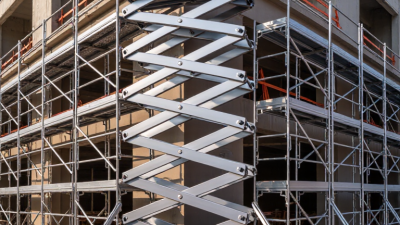
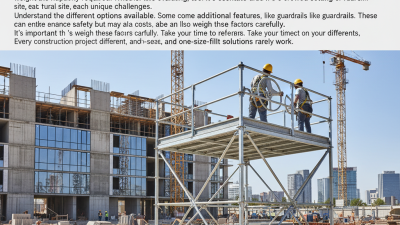
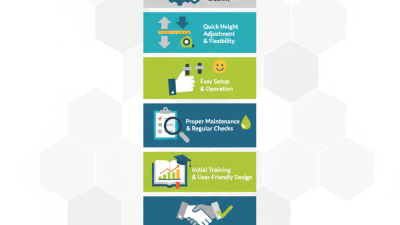
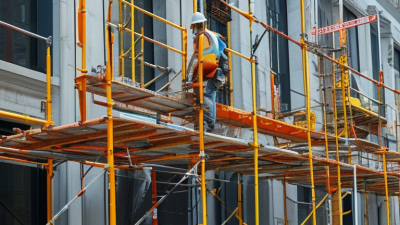
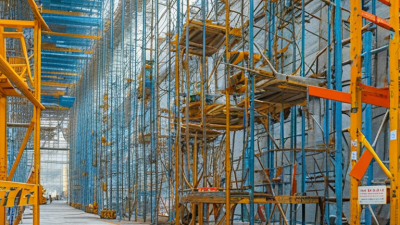
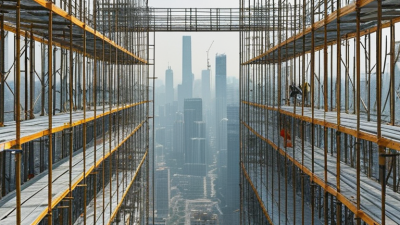
Non stop crank up scaffolding is a temporary access system designed to raise or lower workers and materials through a hand-operated or powered crank mechanism. Unlike fixed scaffolding, it can adjust working height without complete dismantling. Picture a façade crew moving from a second-storey window to a roofline while the platform rises in controlled increments. That practical movement explains its value on masonry, painting, glazing, and maintenance projects.
The term is not perfectly standardized across suppliers. Some manufacturers use it for adjustable suspended platforms, while others describe similar equipment as crank-up scaffolding or hoist-supported platforms. This difference matters. Buyers should verify load ratings, platform dimensions, rope systems, brakes, outriggers, and emergency procedures against the manufacturer’s technical documentation. OSHA estimates that about 2.3 million construction workers use scaffolds, with thousands of scaffold-related injuries reported each year. OSHA Standard 29 CFR 1926.451 also requires proper design, inspection, access, and fall protection. These requirements are not optional details.
Market research reports from Grand View Research and The Business Research Company identify continuing demand for scaffolding and access equipment, supported by urban construction, renovation, and infrastructure maintenance. However, market growth does not automatically mean safe operation. A poorly leveled base can tilt a platform. A neglected wire rope can hide serious wear. That is the uncomfortable part. The equipment may look simple, yet safe performance depends on engineering, inspection, worker training, and disciplined setup. This guide explains how non stop crank up scaffolding works, where it fits, and what users should question before choosing it.
What Is Non-Stop Crank Up Scaffolding?
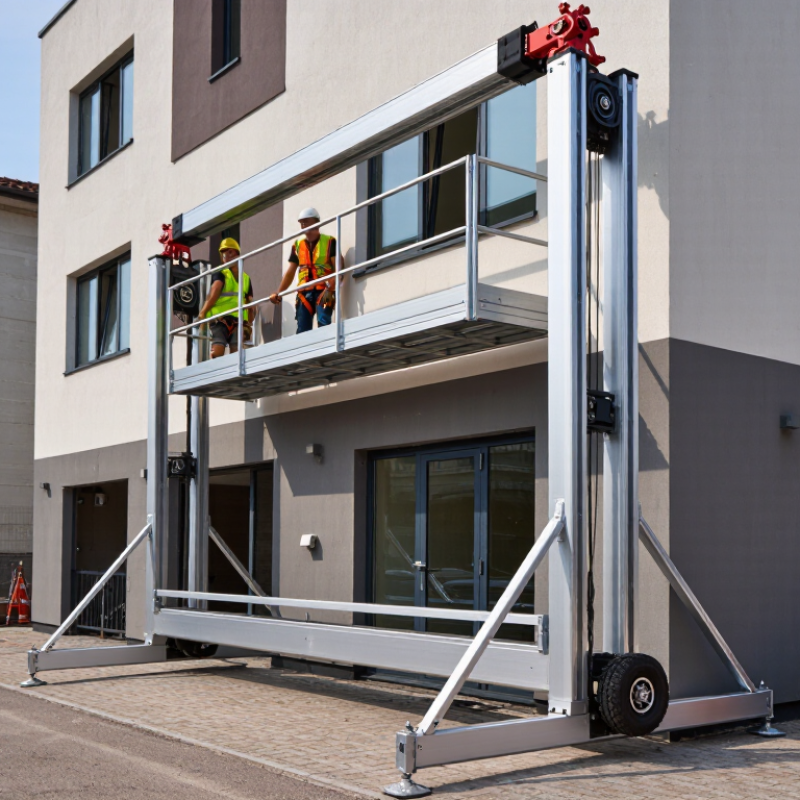
Non-stop crank up scaffolding usually describes a height-adjustable work platform operated by a hand crank or mechanical lifting system. Workers can raise or lower the platform without dismantling the entire scaffold. The phrase “non-stop” is not a universal technical classification. It often describes uninterrupted workflow, not unlimited movement. This distinction matters during procurement.
A typical system uses telescopic masts, stabilizers, guardrails, and a controlled lifting mechanism. Operators should check load limits, ground conditions, locking devices, and emergency procedures before use. The U.S. Occupational Safety and Health Administration reports that scaffold-related accidents cause about 4,500 injuries and 50 deaths each year. That figure makes daily inspection more than paperwork. It becomes a practical control.
Field experience shows that smooth height adjustment can reduce repeated climbing and manual repositioning. It may also improve productivity around masonry, façade repair, and overhead installation work. However, faster movement can create false confidence. A platform still needs level support, complete edge protection, and trained operators. The International Powered Access Federation reported 255 serious incidents involving powered access equipment in 2023, including fatal events. Crank-operated platforms are not identical, but the risk lesson remains relevant. Human error is still possible. Maintenance records should identify unusual sounds, uneven lifting, worn cables, and damaged pins. I would also question the phrase “non-stop”; no safe system should encourage rushed operation or skipped inspections.
Non-stop crank-up scaffolding refers to height-adjustable scaffold equipment that uses a manual or powered crank mechanism to raise and lower the working platform. The chart shows the uniformly distributed platform loads defined by the six service-load classes in EN 12811-1, a European standard for temporary access and working scaffolds.
Higher service-load classes indicate greater allowable uniformly distributed load on the scaffold platform. Actual equipment selection, height adjustment, anchoring, and safe working load must follow the manufacturer’s instructions and applicable local regulations.
Non-stop crank-up scaffolding is a height-adjustable work platform. The phrase “non-stop” is not a universal engineering classification. Usually, it means crews can raise or lower the deck without dismantling the scaffold. That distinction matters. Its core components include a steel or aluminum frame, vertical guide masts, a work platform, guardrails, outriggers, locking pins, and a crank-driven hoist. Depending on the design, the hoist uses a cable drum, chain, or screw transmission. Turning the crank creates controlled mechanical advantage. The drum winds the lifting line, while guides keep the platform level. Mechanical locks or secondary restraints should hold the load if cranking stops. Not every low-cost explanation makes this clear.
Mechanical locks or secondary restraints should hold the load if cranking stops.
Field experience shows that smooth lifting depends on balance, lubrication, and equal loading. An offset bucket can twist the platform before the operator notices. Inspection should cover ropes, pins, welds, mast tracks, and anchor points.
OSHA recorded 395 fatal construction falls in 2022, representing 36.5% of 1,069 construction deaths. The Bureau of Labor Statistics counted 1,075 construction fatal work injuries in 2023.
These reports do not isolate crank-up scaffolds, but they expose the risk environment. A reliable setup needs a rated capacity, level ground, controlled cranking, and documented pre-use checks. I still question the word “non-stop.” Any jam, overload, or damaged cable should stop the lift immediately. Continuous adjustment is useful; continuous movement is not the goal.
What Is Non Stop Crank Up Scaffolding?
How Non-Stop Crank Up Scaffolding Operates
Non-stop crank-up scaffolding is a height-adjustable work platform used during masonry, façade, and finishing work. Its name can sound misleading. The platform does not rise endlessly without checks. Instead, workers adjust its height through a hand-operated or powered crank system as the building changes.
The system usually includes a stable base, vertical masts, lifting mechanisms, platform sections, and mechanical locks. When the crew turns the crank, synchronized lifting components move the platform upward along the masts. Some systems use screw jacks, while others use rack-and-pinion or cable-assisted mechanisms. The movement should remain even on both sides. Uneven lifting can twist the platform and create dangerous loading conditions.
Before raising it, trained workers inspect the mast connections, guardrails, toe boards, deck, and ground support. They also confirm the permitted load, wind conditions, and clearance from nearby structures. Tools should remain secured, especially when the platform is moving. A small height change may be useful for bricklaying, but it still requires controlled operation.
In practical use, this scaffold reduces repeated dismantling and rebuilding. Crews can work closer to the wall and adjust their position with less interruption. However, “non-stop” should never mean careless operation. The crank may move smoothly, yet hidden wear, loose fasteners, or an uneven base can remain unnoticed. That is where experience matters. Manufacturers’ instructions and local safety rules must guide every lift.
| Data Dimension | Typical Description or Value | How It Operates | Practical Benefit |
|---|---|---|---|
| Equipment Type | Manually height-adjustable work platform | The platform is raised or lowered through a crank-operated mechanical lifting system rather than by dismantling and rebuilding scaffold sections. | Allows workers to adjust the working level more efficiently during repetitive tasks. |
| Main Power Source | Manual crank input | The operator turns a hand crank, which transfers rotational force through gears, drums, cables, chains, or screw mechanisms, depending on the design. | Provides controlled vertical movement without an external electrical or hydraulic power supply. |
| Height Adjustment | Continuous adjustment within the rated travel range | Unlike fixed-height frames, the working platform can normally be positioned at intermediate levels instead of only at predetermined frame increments. | Improves access to changing work surfaces and reduces unnecessary reaching or bending. |
| Typical Platform Length | Approximately 1.2–2.4 m for compact units | The platform provides the standing and working area while remaining connected to the lifting frame and stabilizing structure. | Supports common maintenance, finishing, installation, and inspection activities. Actual dimensions depend on the equipment design. |
| Typical Platform Width | Approximately 0.6–1.2 m for compact units | The width is determined by the platform frame, guardrail arrangement, and the intended number of workers and materials. | Balances usable work space with maneuverability in restricted areas. |
| Lifting Mechanism | Mechanical gear, winch, cable, chain, or screw assembly | Crank rotation is converted into a slower lifting force. The mechanism controls the rate of travel and helps prevent sudden platform movement. | Offers precise positioning when the system is correctly assembled, maintained, and loaded within its rating. |
| Movement Direction | Vertical upward and downward travel | Turning the crank in one direction raises the platform; turning it in the opposite direction lowers it, subject to the manufacturer’s operating instructions. | Enables quick changes between working levels without replacing scaffold components. |
| Load Capacity | Equipment-specific; commonly stated in kilograms on the rating plate | The allowable load includes workers, tools, materials, and any accessories placed on the platform. The rated value must not be exceeded. | Maintains structural stability and protects the lifting components from overload. |
| Stabilization | Base frame, locking casters, outriggers, braces, or stabilizers | Stabilizing components keep the unit level and limit unwanted rolling, swaying, or tipping during use. | Improves platform stability, especially when the unit is elevated or used on a mobile base. |
| Guardrail System | Top rail, intermediate rail, and toe board where required | Guardrails form a protective boundary around exposed platform edges. Toe boards help reduce the risk of tools or materials sliding from the platform. | Reduces fall and falling-object hazards when installed according to applicable requirements. |
| Locking and Braking | Mechanical crank control plus wheel or frame locks | The lifting mechanism holds the selected height, while wheel brakes or base locks prevent movement when the scaffold is positioned for work. | Helps keep the platform stationary during access, loading, and work operations. |
| Operating Sequence | Inspect → level → lock → crank → secure → work | The operator checks the structure, places it on a suitable surface, engages stabilizers, adjusts the height, and confirms that the platform and access points are secure. | Creates a repeatable procedure for safer and more consistent operation. |
| Adjustment Speed | Manual and dependent on crank ratio and travel distance | A geared mechanism normally trades speed for lifting force, so the platform moves gradually as the crank is turned. | Allows fine height positioning but requires more operator time than powered lifting equipment. |
| Surface Requirement | Firm, level, and adequately supporting ground | The base must remain stable while the platform is raised. Unstable soil, slopes, loose materials, or improvised supports can affect balance. | Reduces the risk of settlement, leaning, rolling, and instability. |
| Pre-Use Inspection | Required before each work shift or use | Inspect frames, welds, pins, braces, platform boards, guardrails, wheels, cables, gears, crank handles, and locking devices for damage or excessive wear. | Helps identify defects before they affect lifting or platform stability. |
| Primary Applications | Finishing, painting, electrical installation, maintenance, inspection, and light construction work | The adjustable platform places workers closer to the task while the scaffold remains assembled. | Can reduce repeated ladder repositioning and improve access to elevated work areas. |
| Key Limitation | Not a substitute for a powered hoist or an incorrectly rated access system | The unit must be used only within its rated height, load, surface, wind, and configuration limits. Modifications should not be made without approval. | Ensures that the mechanical lifting system and supporting structure remain within their intended operating conditions. |
Note: Dimensions, working height, load capacity, and permitted configurations vary by scaffold design. Always follow the equipment rating plate, assembly instructions, applicable local regulations, and site-specific safety procedures.
Non Stop Crank Up Scaffolding is a manually adjustable work platform. Workers raise or lower it with a crank mechanism. This design supports repeated height changes without dismantling the entire structure. The term can be confusing, because adjustment still requires controlled operation and inspection. It is not an automatic safety system.
On construction sites, crews use this scaffolding for brickwork, exterior repairs, painting, window installation, and facade cleaning. Maintenance teams also use it for lighting, ventilation equipment, roofing edges, and building inspections. A platform can move closer to the work area, reducing awkward reaching and unnecessary ladder use. It works well where access changes during the day. However, tight courtyards, sloped surfaces, and heavy materials may limit its usefulness. I have found that saving setup time can encourage rushed checks. That is a serious weakness.
Tips:
Check the frame, wheels, cables, pins, and crank before each shift. Place the scaffold on firm, level ground. Lock every wheel before climbing. Keep tools balanced and respect the posted load limit. Use guardrails and approved access points. Workers should receive practical training and follow local safety requirements. Never adjust the platform while someone is standing on it, unless the equipment instructions specifically allow that operation. Small oversights matter.
Non-stop crank-up scaffolding is a manually or mechanically adjustable platform system. Its working height changes through synchronized cranks, without rebuilding the full scaffold. That convenience can hide serious risks.
OSHA estimates scaffold incidents cause about 4,500 injuries and 50 deaths annually in the United States. Its safety guidance also states that roughly 65% of construction workers use scaffolds.
Inspection must be practical, not ceremonial. A competent person should check the scaffold before every work shift and after strong winds, impact, alteration, or unusual loading.
Confirm stable footing, locked casters, level frames, secure guardrails, complete decking, and visible crank cables.
The platform should rise evenly. Stop immediately if one side moves first.
OSHA standard 29 CFR 1926.451 requires scaffold components to support their intended loads, including workers, tools, and materials.
Maintenance needs a written rhythm. Clean threaded parts, inspect pins for deformation, and replace damaged cables or bent components.
Do not improvise repairs with wire, loose boards, or mismatched fasteners.
A weekly checklist helps, but it is not enough after an incident. Workers should keep tools close and avoid overreaching from the platform. Small habits matter.
In practice, inspections are sometimes rushed before a deadline. That weakness deserves honest correction, because a quiet crank can still conceal a dangerous failure.