Buying non stop crank up scaffolding requires more than comparing prices or platform heights. The right system must match your building’s elevation, working load, lifting frequency, ground conditions, and crew experience. A reliable supplier should provide clear specifications, inspection guidance, maintenance records, replacement-part availability, and practical training. Ask how the crank mechanism performs under repeated use. Also check whether the frame feels stable when raised, not only when displayed in a showroom.
Scaffolding safety researcher Sidney Dekker states, “Safety is the presence of capacity to make things go right.” This principle matters when choosing non stop crank up scaffolding. A strong purchase decision includes safe operating procedures, emergency planning, and realistic site testing. Look closely at locking pins, wheel brakes, guardrails, outriggers, and platform access. Small details matter.
Do not trust impressive photographs alone. Request load charts and independent test documentation. Confirm that the equipment suits your local workplace requirements and the manufacturer’s instructions. A cheap unit may become expensive when parts are difficult to source or technicians cannot service it. That said, even a premium product can fail through poor assembly or rushed inspections. This is where buyers sometimes make mistakes.
This guide will examine product construction, lifting performance, supplier credibility, safety features, total ownership cost, and after-sales support. It will also question common buying habits. “Bigger” is not always better. The safest choice is the system your team can inspect, operate, and maintain correctly every day.
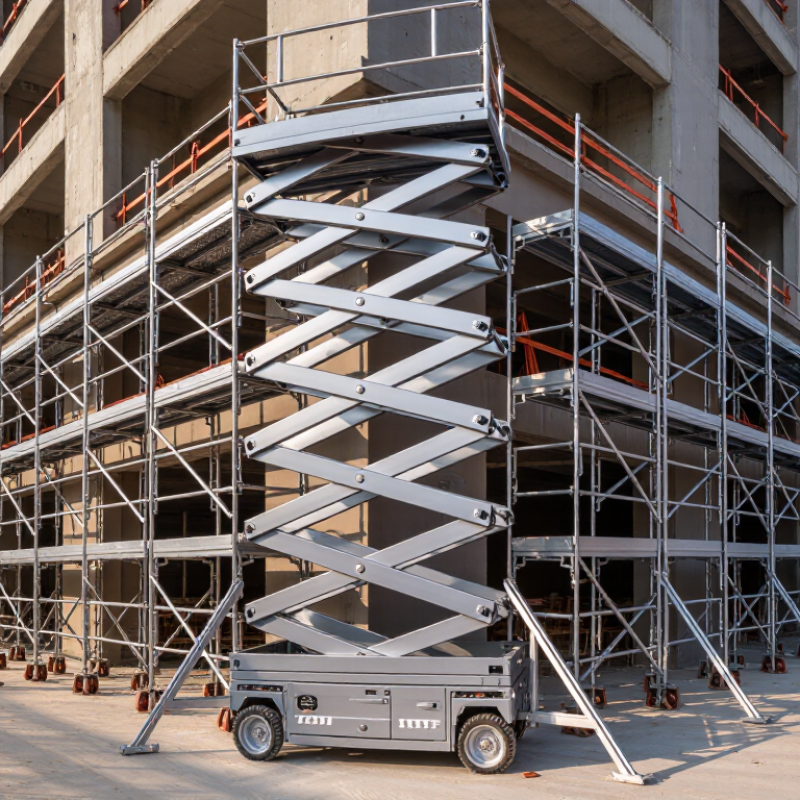
Non-stop crank-up scaffolding is a height-adjustable work platform designed to change elevation without complete dismantling. A hand crank, screw jack, or synchronized lifting system raises the deck gradually. This helps crews follow changing wall heights, window lines, and finishing levels. The term sounds precise, but it is not a universal technical classification. Sellers may describe different mechanisms with the same phrase. That deserves careful attention.
When buying, verify the actual lifting method, rated load, platform dimensions, locking system, and maximum working height. Ask for engineering drawings, inspection records, and clear assembly instructions.
OSHA estimates that about 2.3 million construction workers use scaffolds, while scaffold-related accidents cause roughly 4,500 injuries and 50 deaths annually in the United States. The figures are old, but still useful. They show why smooth adjustment cannot replace stability controls.
Check guardrails, caster brakes, outriggers, base plates, and emergency lowering provisions. Confirm that the system meets applicable requirements, such as EN 12811-1 or local regulations.
A practical test should include raising the platform under controlled conditions. Watch for uneven movement, cable slack, sudden stops, or frame twisting. The crank should turn smoothly, not forcefully.
Load calculations must include workers, tools, materials, and stored water or debris. I would also question vague claims like “continuous height adjustment.” It may mean convenience, not unlimited movement.
A qualified person should review the site before purchase, because a well-made scaffold can still fail when the ground, wind, or assembly is wrong.
Before choosing crank-up scaffolding, define the work clearly. Measure the highest working point, platform length, access route, and ground conditions. Consider whether workers will handle masonry, tools, panels, or lighter finishing materials. These details determine the required platform size and safe working load. Do not guess.
Inspect the building elevation for balconies, roof edges, power lines, trees, and uneven surfaces. A small obstruction can change the equipment layout completely. Ask a qualified scaffolding professional to review wind exposure, tie points, guardrails, toe boards, and emergency access. The crank system should raise smoothly and remain stable at every intended height. Check its rated capacity, inspection records, replacement parts, and operating instructions before purchase.
Plan for the full project period, not only the first day. Frequent height changes may require a durable lifting mechanism and clear space around each base. Confirm that the scaffold can pass through gates or be transported safely to the work area. Local safety requirements still apply, even on private property. My own estimates have sometimes failed when delivery access was overlooked. Recheck measurements with the site supervisor, especially after excavation, paving, or material storage changes. Reliable suppliers should explain limitations plainly and provide documented load information rather than promising that one setup fits every project.
When buying non-stop crank up scaffolding, check the complete safety system, not only the lifting height.
Confirm the rated platform load, maximum working height, base width, and permissible wind conditions. The load rating must include workers, tools, materials, and movement. A narrow base may feel convenient, but it can reduce stability.
Inspect the crank mechanism carefully.
It should lift smoothly, hold position, and include a dependable brake or locking system. Check the cable, drum, pins, welds, and anchor points for damage or corrosion. Look for guardrails, midrails, toe boards, non-slip decking, and secure access. Outriggers or stabilizers should lock firmly and rest on suitable ground. Small defects matter.
Ask for clear assembly instructions, inspection records, and proof of tested capacity.
Safety labels should remain readable. The equipment should comply with applicable local standards and workplace rules. Do not rely on appearance alone. A clean frame may hide worn internal parts. Have a competent person inspect the scaffold before use and after relocation or severe weather. Cranking while someone stands below is unacceptable. Keep the area clear.
Specifications can still be misunderstood.
The highest advertised height may apply only under specific stabilizing conditions. Request written limits from the supplier. Compare those details with your actual site, including uneven ground, overhead obstructions, and nearby power lines. If the documentation is vague, pause the purchase. That hesitation may prevent a serious mistake.
Buying non-stop crank-up scaffolding requires more than comparing the lowest quotation. Start with the working height, platform load, adjustment range, wheel design, and storage conditions. Ask each supplier for test certificates, user instructions, material specifications, and inspection records. EN 12811-1 provides useful performance principles for temporary works, but compliance wording alone does not prove product quality. Check weld consistency, crank smoothness, locking pins, and visible corrosion. Small defects matter.
Compare prices on a like-for-like basis. Include delivery, spare parts, training, warranty terms, and replacement components. A cheaper frame may become expensive when a crank handle fails during a busy project. The U.S. Bureau of Labor Statistics recorded 1,075 fatal injuries in construction and extraction occupations in 2023. The UK Health and Safety Executive recorded 40 worker deaths from falls from height in 2023/24. These figures make stability evidence more important than sales claims. Request the rated load, base dimensions, maximum height, and wind limitations in writing. Then verify whether those figures match your actual site.
Supplier experience also deserves testing. Ask for references from contractors using similar equipment, not only warehouse photos. A factory visit can reveal practical details, including quality control and storage discipline. I would not rely on a polished certificate alone. Some documents are current, while others are vague or outdated. Compare three written offers, inspect one sample unit, and record every unanswered question before purchasing.
| Comparison Dimension | Typical Market Benchmark | What to Request from Each Supplier | Buying Decision Guide |
|---|---|---|---|
| Product configuration | Mobile tower with a manual crank or winch-based height-adjustment system, working platform, guardrails, toe boards, stabilizers, and lockable casters. | A complete parts list, assembly drawing, operating instructions, and photographs of the actual configuration. | Reject quotations that describe only a frame or tower without confirming the included safety components. |
| Working height | Common adjustable systems cover approximately 2.5–10 m working heights, depending on the tower design and local regulations. | Platform height, maximum working height, adjustment increments, and the permitted height when mobile. | Compare the actual platform height rather than marketing terms such as “extra high” or “multi-level.” |
| Rated load capacity | Many light and medium-duty mobile towers are rated around 150–450 kg, including workers, tools, and materials. The exact value is design-specific. | Maximum platform load, distributed-load limits, point-load limits, and load ratings at each height setting. | Select capacity based on the total intended load, not only the operator’s weight. |
| Frame material | Aluminum is commonly selected for lower weight and corrosion resistance; galvanized or painted steel is generally heavier and may offer higher stiffness. | Material grade, tube diameter, wall thickness, welding or joint details, and corrosion-protection method. | Do not compare aluminum and steel only by price; compare total weight, rigidity, maintenance, and transport requirements. |
| Crank and lifting mechanism | A reliable system should include controlled lifting, positive locking, anti-backdrive protection, and a clearly stated safe working load. | Winch or crank specifications, cable or chain type, brake system, locking method, replacement-part availability, and maintenance schedule. | Give priority to a documented locking and braking system over a lower purchase price. |
| Platform dimensions | Typical platform footprints range from approximately 0.6 × 1.2 m to 1.5 × 2.5 m, depending on portability and intended use. | Usable platform length and width, platform surface type, access opening, hatch design, and edge protection. | Choose the smallest platform that safely accommodates the task to reduce transport and storage costs. |
| Casters and stabilizers | Industrial swivel casters commonly range from about 125–200 mm in diameter. Brakes should prevent both wheel rotation and caster swiveling where required. | Caster diameter and load rating, brake design, stabilizer footprint, leveling method, and ground-condition limits. | Confirm whether the quoted price includes stabilizers and adjustable leveling components. |
| Guardrails and toe boards | A complete working platform normally requires top rails, intermediate rails, toe boards, and safe access protection. | Guardrail height, toe-board height, gate or access arrangement, and installation instructions. | Avoid products supplied without full edge protection unless a qualified person confirms an alternative compliant system. |
| Standards and compliance | Depending on the market, relevant references may include OSHA 29 CFR 1926.451, EN 1004-1, EN 1004-2, or AS/NZS 1576.1. | Applicable standard, test reports, conformity declaration, design calculations, inspection records, and traceable serial numbers. | Verify compliance for the country where the equipment will be used; a generic “CE” statement alone is not a complete technical assessment. |
| Product quality inspection | Key checks include straight frames, consistent welds, smooth crank operation, secure locking pins, undamaged platforms, and correctly fitting components. | Pre-shipment inspection checklist, dimensional inspection results, load-test records, packing photographs, and defect-handling procedure. | Use independent inspection for large orders or customized designs. |
| Indicative purchase price | Manual crank-up mobile scaffold systems commonly fall in a broad budgetary range of approximately USD 700–2,500, excluding freight, taxes, and special accessories. | A like-for-like quotation showing platform height, capacity, materials, included accessories, packaging, freight, taxes, and payment terms. | Compare total landed cost, not the factory or unit price alone. Unusually low prices may exclude essential safety parts. |
| Minimum order and lead time | Standard models generally have shorter production times than customized systems; export orders may require additional time for inspection and shipping. | Minimum order quantity, production lead time, sample availability, shipping term, estimated transit time, and dispatch location. | Request a sample or production inspection before committing to a large quantity. |
| Warranty and spare parts | Commercial warranties commonly range from 12–24 months, subject to correct use and maintenance. | Warranty exclusions, spare-part prices, availability of cables, wheels, pins, brake parts, platforms, and crank components. | A slightly higher initial price can reduce downtime when replacement parts are readily available. |
| Documentation and training | Safe operation requires assembly instructions, inspection procedures, maintenance guidance, and working-height limitations. | English manual, assembly video or training material, inspection checklist, risk information, and operator qualifications required by local rules. | Treat missing documentation as a quality and compliance risk, even when the physical product appears acceptable. |
Before buying non-stop crank up scaffolding, confirm how the equipment will work on your actual site. Measure the required platform height, working width, access route, and storage area. Then calculate the total load, including workers, tools, materials, and weather-related movement. Do not estimate casually. A platform that looks spacious may still have a strict load limit.
Ask the supplier for clear specifications, assembly instructions, inspection records, and details about the crank mechanism. Confirm the frame material, platform surface, stabilizers, locking devices, wheels, and emergency lowering process. Check whether the equipment suits uneven ground or requires a prepared base. Delivery time matters too. A delayed scaffold can disrupt several trades. Confirm spare parts, maintenance support, warranty terms, and local safety requirements before paying.
Tips
Request a written quotation with every accessory listed. Ask who performs pre-shipment checks and how defects are handled. Photograph the delivery condition before assembly. During setup, verify that pins, braces, and locks engage correctly. Never depend only on appearance. A smooth crank does not prove safe operation. I would also ask for a demonstration, even when the mechanism seems simple. That small step may expose awkward controls or missing instructions. Recheck the order after discussing it with the site supervisor; my first equipment list once missed the platform gate, an easy detail to overlook.