Choosing the best crank up scaffolding in China requires more than comparing factory prices. It requires evidence.
The global scaffolding market continues to expand. Grand View Research estimates that the market could grow at approximately 5% annually through 2030. However, market growth does not guarantee product quality. OSHA reports that about 2.3 million construction workers use scaffolds annually in the United States. Scaffold-related accidents still cause roughly 4,500 injuries and 50 deaths each year, according to OSHA safety data.
These figures make selection practical, not cosmetic. A reliable crank up scaffolding system should provide clear load ratings, stable outriggers, corrosion-resistant frames, and controlled platform movement. Check whether the manufacturer follows recognized requirements, such as EN 1004-1, EN 13157, or applicable national standards. Ask for test reports, material certificates, weld inspection records, and traceable quality documents. Photographs are useful. They are not enough.
David Michaels, former Assistant Secretary of Labor for OSHA, said, “Every worker has the right to return home safe and healthy every day.” That principle should guide supplier evaluation. A competent Chinese manufacturer should explain wind limits, maximum working height, inspection procedures, and replacement-part availability without avoiding difficult questions.
The cheapest quotation may look attractive. It may also hide thinner steel, weaker wheels, or unclear testing. I would not pretend that one model fits every project. Building height, ground conditions, transport frequency, and crew experience can change the decision. This guide compares those details, so buyers can select crank up scaffolding with greater confidence and fewer expensive surprises.
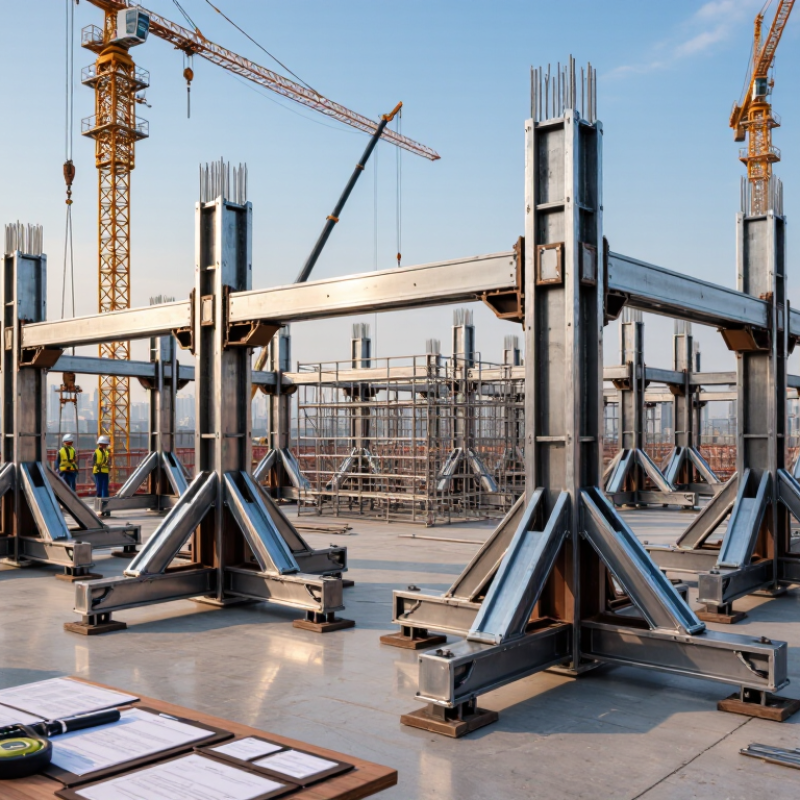
How to Choose the Best Crank Up Scaffolding in China?
Crank-up scaffolding is a height-adjustable work platform operated by a hand crank. Its main value is controlled elevation without repeated dismantling. Typical applications include interior painting, plastering, electrical installation, warehouse maintenance, and low-rise facade repairs. A worker can raise the platform beside a wall, keep tools within reach, and reduce ladder repositioning. However, convenience does not replace risk control. OSHA estimates that scaffolding accidents cause about 4,500 injuries and 50 deaths each year in the United States. The figures are older, but still useful for evaluating design priorities.
When choosing equipment in China, check rated load, platform width, base stability, wheel locks, guardrails, and independent locking mechanisms. Ask for load-test records, material specifications, inspection procedures, and clear operating instructions. Relevant references include OSHA 29 CFR 1926 Subpart L and ANSI/ASSP A10.8, while local projects may require Chinese national or industry standards. A corrosion-resistant steel frame suits humid sites, but aluminum can reduce handling effort. The best choice depends on the actual task. A narrow platform may pass through doors, yet feel unstable with materials onboard. That trade-off is easy to overlook. On site, inspect the crank, pins, welds, and leveling feet before every shift. Even a compliant scaffold can become unsafe after poor assembly, uneven flooring, or rushed maintenance.
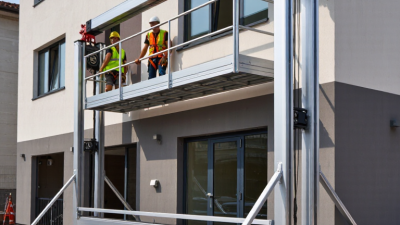
Crank-up scaffolding is commonly selected for low- and medium-height construction tasks because its working platform can be raised or lowered quickly. The chart compares typical working-height ranges by application to support an initial equipment selection.
Lower platforms are generally suitable for interior finishing and MEP installation, while masonry and façade work often require greater reach. Final selection should also verify rated load capacity, platform size, stabilizers, wheel locking, guardrails, and compliance with applicable Chinese safety requirements.
Choosing a crank-up scaffold in China starts with the work, not the catalog. Record platform height, maximum reach, worker count, tools, and material loads. Do not confuse platform height with working height. The latter includes a safe worker reach allowance, confirmed by a competent person.
OSHA’s Scaffold Safety Fact Sheet estimates 4,500 scaffold-related injuries and 50 deaths annually in the United States. That figure is not a Chinese forecast, but it shows why capacity and access require evidence.
Request load calculations, inspection records, test certificates, and clear instructions in Chinese.
Working height must match the building geometry and the scaffold’s adjustment range. Check guardrails, toe boards, access ladders, stabilizers, and emergency lowering arrangements.
OSHA requires fall protection for workers on scaffolds more than 10 feet above a lower level.
The 7th edition of CPWR’s The Construction Chart Book reports that falls caused 36.4% of construction fatalities from 2011 to 2020. This is a serious warning.
Site conditions can defeat good equipment. Inspect the slab for cracks, slope, drainage, and hidden voids. Lock casters before climbing. Never use leveling devices as a substitute for a stable base.
Wind exposure, overhead cables, narrow corridors, and nearby moving vehicles also affect the selection. Have a qualified engineer verify applicable Chinese standards and site calculations.
I would not approve a unit from photographs alone. A neat checklist can still miss a weak floor.
How to Choose the Best Crank Up Scaffolding in China?
Crank-up scaffolding suits projects needing adjustable working heights and compact movement. Manual systems are simple, while powered systems raise platforms faster. A manual crank may be enough for interior repairs. Powered lifting can help on taller façades, but it needs stronger inspection routines. Measure twice. Consider platform length, base width, maximum height, and storage space before comparing prices.
Material affects durability and handling. Galvanized steel offers strong resistance to impact and rough construction conditions. Aluminum is lighter and easier to reposition, but it may flex more under heavy, uneven loads. Check weld quality, frame thickness, locking pins, wheels, and corrosion protection. A clean finish does not always prove reliable workmanship. Request production records, load test reports, and clear maintenance instructions from the supplier.
Load capacity requires more than reading one number. Separate the platform’s rated load from the safe working load of the complete system. Include workers, tools, materials, wind exposure, and movement during lifting. A 300-kilogram platform rating may become unsuitable when loads are concentrated near one edge. Confirm whether the stated capacity applies at every height. Independent inspection adds confidence, especially for frequent rental use. Some buyers focus too heavily on the lowest quotation. That choice can overlook replacement parts, training, and downtime. Even experienced teams can miss small defects during delivery checks. Inspect every wheel, brake, crank, guardrail, and connection before use.
| Scaffolding Type | Typical Adjustment or Working Height | Main Materials | Typical Rated Platform Load | Load Class Reference | Mobility and Setup | Best-Suited Applications | Key Selection Considerations |
|---|---|---|---|---|---|---|---|
| Crank-Adjustable Mobile Scaffold | Usually about 1.5–6 m, depending on the tower design and stabilizer arrangement | Powder-coated or galvanized steel frame, aluminum or steel platform, steel crank and cable components | Approximately 150–450 kg total platform load | Commonly selected for light- to medium-duty maintenance work; confirm the manufacturer’s tested rating | Height can be adjusted with a manual or powered crank; lockable casters allow relocation when fully lowered and safely unloaded | Indoor maintenance, lighting installation, warehouse services, HVAC work, and short-duration construction tasks | Check brake quality, cable or screw mechanism, anti-tip outriggers, platform guardrails, and whether adjustment is permitted while occupied |
| Single-Width Frame Scaffold | Commonly assembled in lifts of about 1.5–2 m; total height depends on the number of frames and bracing | Primarily galvanized steel; aluminum versions are available for reduced weight | Approximately 150–300 kg per working platform | Often used around 0.75–2.0 kN/m², subject to configuration and local regulations | Relatively fast to assemble with stacked frames, cross braces, platforms, and guardrails; mobile versions use casters | Painting, façade repairs, interior finishing, electrical work, and general low- to medium-duty access | Verify frame compatibility, base-jack adjustment, brace locking, platform width, and maximum permitted height-to-base ratio |
| Ringlock System Scaffold | Typically built in 0.5 m or 1 m vertical increments; suitable for multi-level structures | Hot-dip galvanized steel standards, ledgers, braces, base collars, and adjustable base jacks | Approximately 200–600 kg per platform, depending on bay size, lift height, and bracing | Can be configured for approximately 1.5–6.0 kN/m² when engineered and braced correctly | Moderate setup speed; wedge connections provide flexible bay layouts and good structural stability | Industrial plants, shipyards, commercial construction, heavy maintenance, and irregular structures | Review node quality, tube wall thickness, ledger length, base support, tie-in requirements, and the engineered load path |
| Cuplock System Scaffold | Usually assembled in standard lifts of about 1.5–2 m and can be extended to substantial heights | Galvanized steel standards, ledgers, transoms, and cup-and-blade locking components | Approximately 200–600 kg per platform, depending on span and bracing | Commonly configured for about 1.5–4.5 kN/m² in appropriately designed applications | Fast repetitive assembly with captive cup connections; well suited to regular elevations and broad work fronts | Building construction, concrete work, façade access, industrial maintenance, and temporary support structures | Check cup engagement, standard straightness, ledger seating, platform support, foundation levelness, and required ties |
| Tube-and-Clamp Scaffold | Highly flexible; height and width are determined by tube lengths, coupler locations, and the design layout | Galvanized steel tubes with pressed, forged, or malleable iron couplers | Approximately 150–500 kg per platform when properly designed and braced | Load capacity must be calculated for each configuration; it is not determined by tube diameter alone | Slowest to assemble among the listed systems but offers excellent adaptability around obstructions | Complex façades, bridges, tanks, process equipment, restoration work, and areas with difficult geometry | Prioritize coupler slip resistance, tube condition, right-angle and swivel coupler strength, tie spacing, and professional design |
| Aluminum Mobile Tower | Commonly about 2–12 m working height, subject to tower width, stabilizers, and local rules | Extruded aluminum frames, aluminum platforms, steel or aluminum braces, and lockable casters | Approximately 150–300 kg total platform load | Usually intended for light- to medium-duty access rather than heavy material storage | Lightweight and easy to move; requires level ground, locked casters, guardrails, and stabilizers before use | Indoor installation, retail maintenance, aircraft or transport facilities, and clean environments | Check platform deflection, caster brakes, stabilizer dimensions, wind restrictions, electrical-contact risks, and height limits |
| Heavy-Duty Shoring and Access Scaffold | Designed as an engineered multi-level structure rather than a simple adjustable access tower | High-strength galvanized steel components, heavy-duty standards, beams, ledgers, and adjustable jacks | Approximately 500–1,000 kg or more per platform when specifically engineered | May be designed for 3.0–6.0 kN/m² or higher project-specific loads | Requires detailed planning, foundation checks, bracing, ties, and controlled assembly by trained personnel | Concrete formwork support, heavy mechanical installation, industrial shutdowns, and high-load construction areas | Obtain structural calculations, verify allowable settlement, inspect every connection, and never substitute a light-duty crank tower |
Note: The figures shown are typical industry ranges for preliminary comparison only. Actual capacity depends on the complete configuration, platform dimensions, working height, bracing, foundation, wind exposure, accessories, and applicable local safety standards. Always use the rated capacity and assembly instructions supplied for the specific scaffold model.
Choosing crank-up scaffolding in China starts with evidence, not catalogue photographs. OSHA reports about 4,500 scaffold-related injuries and 50 deaths annually in the United States. That statistic makes platform stability, guardrails, locking devices, and training urgent evaluation points. Ask the manufacturer to identify the exact standard used, such as EN 1004-1 for relevant mobile access towers, or the applicable Chinese GB standard. Standards are not interchangeable.
A credible factory should provide a current ISO 9001 certificate from an accredited certification body. Check its legal entity, validity, and certification scope. The ISO Survey of Certifications has recorded more than one million ISO 9001 certificates worldwide. Certification supports process control, but it does not prove every scaffold is safe. Request material certificates, weld inspection records, load-test results, dimensional drawings, and serial-number traceability. Confirm that test samples represent the delivered crank mechanism, not an older model.
During a factory audit, operate the crank under load and inspect pin engagement. Measure frame distortion after repeated cycles. Look for clean weld toes, protected threads, non-slip platforms, and readable warning labels. Ask how rejected parts are quarantined.
Independent inspection before shipment can expose missing guards or inconsistent tube thickness. I would also verify corrosion protection after cutting and welding, because this detail is often overlooked. No certificate replaces a site-specific risk assessment, competent assembly, and documented pre-use checks.
Choosing crank-up scaffolding in China requires more than comparing catalogue prices.
Safety should lead the evaluation.
OSHA requires scaffold components to support at least four times the intended load. The ILO’s 2023 report estimated 2.93 million work-related deaths worldwide each year. Small failures matter.
Ask for load charts, brake tests, platform dimensions, guardrail details, and inspection records. Confirm materials and welding quality against applicable Chinese GB/T requirements. A factory video is useful, but it is not proof.
Pricing needs a landed-cost view. Compare the equipment price with packaging, inland transport, export handling, insurance, duties, and spare parts. Request identical specifications from several suppliers.
Otherwise, the lowest quotation may simply omit wheels, stabilizers, or testing. Delivery should include production time, inspection time, port schedule, and a written delay procedure.
The World Bank’s 2023 Logistics Performance Index measures customs, infrastructure, shipment arrangement, logistics competence, tracking, and timeliness. Ask suppliers to report each stage. Do not accept “ready soon.”
After-sales support often reveals the supplier’s real experience. Require an English maintenance manual, assembly drawings, replacement-part numbers, and remote troubleshooting. Ask how quickly technical staff respond.
A 24-hour promise sounds good, yet response quality matters more. I would request one sample inspection before mass shipment.
That adds cost, but it can expose weak welds or inaccurate dimensions early. Keep photos, serial numbers, test certificates, and delivery records.
The process may feel slower. It is still cheaper than discovering a failure beside a working platform.