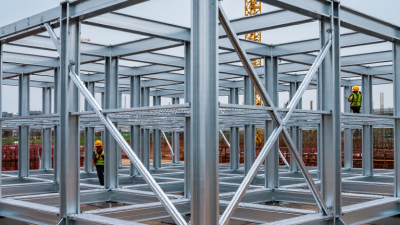
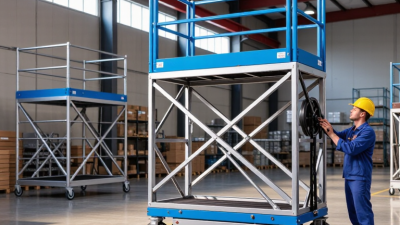
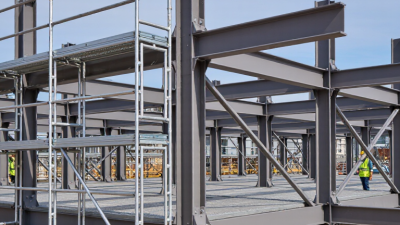
China’s scaffolding industry is entering a more demanding global market. Buyers now expect verified capacity, traceable materials, and consistent safety controls. A non stop scaffolding manual should explain these requirements in practical language, not repeat factory slogans.
OSHA reports that approximately 65% of construction workers perform work on scaffolds. Its safety guidance also links scaffolding failures to falls, falling objects, electrocution, and structural collapse. These risks make inspection records, load calculations, guardrails, and competent supervision essential. The ILO estimates that construction accounts for about one in three work-related fatal injuries worldwide. The numbers remain disturbing.
John H. Howard, former director of the U.S. National Institute for Occupational Safety and Health, has stated, “Prevention is the only acceptable approach to workplace injury.” This principle matters when evaluating Chinese suppliers. Product price alone cannot prove reliability. Buyers should examine steel grades, welding procedures, surface treatment, platform design, testing records, and export experience. They should also confirm compliance with relevant standards, including EN 12811-1, OSHA requirements, or applicable national rules.
A useful non stop scaffolding manual should connect factory practice with jobsite reality. It should show how components are packed, labeled, inspected, and assembled. A bent frame in a humid container may become a serious problem months later. Even experienced buyers can overlook small details. That weakness deserves attention.
This guide therefore assesses Chinese scaffolding suppliers through evidence, not broad claims. It considers manufacturing capability, documentation quality, engineering support, delivery consistency, and after-sales communication. No supplier is perfect. Reliable sourcing depends on asking better questions before the first shipment leaves China.
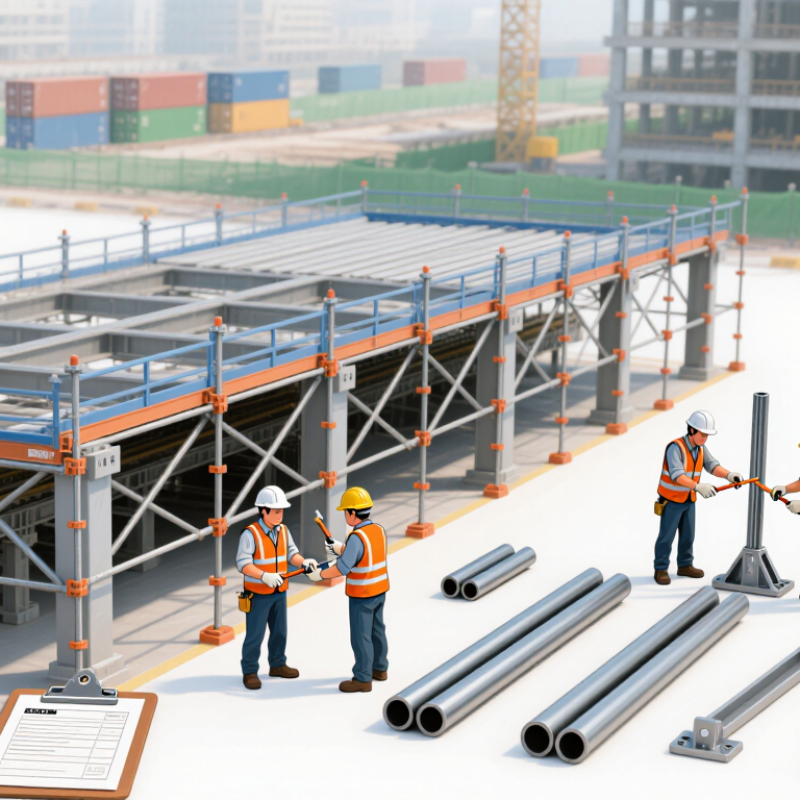
Non-stop scaffolding describes a planned system that keeps safe working platforms available as a structure rises. Crews extend, relocate, or climb scaffold sections without dismantling the entire installation. This approach can reduce idle time on towers, industrial buildings, and large concrete structures. It is not always a standardized technical term. Meanings may differ between countries and suppliers.
The process begins with a reviewed layout, load calculation, and installation sequence. Workers assemble the first platform on firm, level foundations. As construction progresses, trained crews raise or reposition the next section. Guardrails, toe boards, access ladders, and working decks must remain complete at every stage. Never treat continuous movement as permission to skip inspection. It is not.
A competent person should check ties, braces, base supports, platform gaps, and connection pins before each shift. Wind, rain, uneven settlement, and changing material loads can affect stability. For example, a concrete bucket may add a sudden load near one platform edge. That detail matters. Clear drawings and multilingual instructions help global buyers compare capacity, dimensions, materials, and inspection requirements. Buyers should also confirm whether the system needs cranes, lifting frames, or manual handling. The phrase “non-stop” can sound effortless, but real projects still experience delays, damaged components, and installation mistakes. Good planning reduces those risks without pretending they disappear.
Technical note: “Non-stop scaffolding” is a market term rather than one universally defined product standard. It generally describes a planned, modular scaffolding operation that maintains safe working access by using repeated erection, inspection, relocation, or dismantling cycles with minimal interruption.
| Data Dimension | Typical Technical Data | How It Works | Buyer Verification Point |
|---|---|---|---|
| Definition | A continuous-access scaffolding workflow using modular components, controlled work zones, and planned inspection cycles. | One section is erected or adjusted while another approved section remains available for work, subject to the design and site risk assessment. | Request the supplier’s method statement, drawings, risk assessment, and definition of “non-stop.” |
| Common System Types | Tube-and-fitting, frame, cuplock, ringlock, and other modular steel systems. | Vertical standards, horizontal ledgers, diagonal braces, platforms, guardrails, toe boards, and access components form a temporary structure. | Confirm compatibility, component tolerances, material grade, corrosion protection, and system certification. |
| Typical Steel Tube Size | Many tube-and-fitting systems use steel tubes with an outside diameter of approximately 48.3 mm; wall thickness varies by specification. | Tubes are connected with couplers or integrated modular nodes to create bays, lifts, braces, and working platforms. | Check the actual outside diameter, wall thickness, steel grade, weld quality, and applicable product standard. |
| Typical Bay Length | Common modular bay lengths are approximately 0.7 m to 3.0 m, depending on the system and design load. | Shorter bays can improve load distribution and adaptability; longer bays may improve access but require design verification. | Do not select bay length from a catalog alone; verify it against span, platform load, tie pattern, and wind exposure. |
| Typical Lift Height | Approximately 1.5 m to 2.0 m is common for many access scaffold layouts, but project-specific values vary. | Each lift provides a working level or support zone and is connected to adjacent lifts through standards, ledgers, braces, and ties. | Confirm lift height, headroom, platform clearance, access openings, and the engineer’s load calculations. |
| Working Platform | Platforms may use steel planks, aluminum planks, timber boards, or engineered deck units, subject to local requirements. | Decking transfers worker and material loads to ledgers or transoms while guardrails and toe boards help control fall and dropped-object risks. | Verify platform width, slip resistance, uplift retention, allowable load, gaps, and access-hatch protection. |
| Load Classification | Load classes depend on the applicable standard; EN 12811-1, for example, defines scaffold service load classes from 0.75 kN/m² to 6.00 kN/m². | The selected class determines permitted worker, tool, and material loading on the platform. | Obtain stamped calculations or design documents identifying the service load class and load combinations. |
| Stability Measures | Base plates, adjustable base jacks, sole boards, ties, anchors, braces, and compliant foundations are commonly used. | Loads are transferred through the scaffold to the supporting surface, while ties and braces resist movement, sway, and overturning. | Review ground bearing capacity, tie spacing, anchor capacity, brace layout, and wind design. |
| Access Arrangement | Access may use stair towers, internal ladders, stair units, or designated access bays. | Workers move between approved levels without climbing external frames or using unplanned routes. | Check stair width, landing design, handrails, ladder gates, hatch covers, and emergency access provisions. |
| Erection Sequence | Typical sequence: foundation preparation, base installation, first lift, bracing, ties, platforms, guardrails, inspection, and progressive upward erection. | The next work zone is released only after the current zone is structurally complete and inspected. | Request a zone-by-zone erection sequence and define who may authorize release for use. |
| Inspection Frequency | Inspection is required before first use and at intervals specified by local law, company procedures, or after events that may affect stability. | A competent person checks foundations, connections, braces, ties, platforms, guardrails, access, and unauthorized alterations. | Require inspection records, status tags, nonconformity logs, and close-out evidence. |
| Applicable References | Examples include EN 12810, EN 12811, OSHA 29 CFR 1926 Subpart L, and AS/NZS 1576, depending on the project location. | The governing jurisdiction determines design, component, access, inspection, and worker-protection requirements. | Identify one controlling jurisdiction and avoid mixing requirements without an engineer’s written acceptance. |
| Material Protection | Common finishes include hot-dip galvanizing, electro-galvanizing, painted steel, or untreated steel for controlled environments. | Surface protection slows corrosion but does not replace inspection for dents, cracks, deformation, corrosion loss, or damaged welds. | Request coating thickness records, salt-spray data where relevant, repair procedures, and rejection criteria. |
| Operational Advantage | Potentially fewer work stoppages, better material flow, predictable inspection points, and faster adaptation to changing work fronts. | Standardized components and a repeatable zone process reduce unnecessary dismantling and re-erection. | Evaluate the complete process, not only the component price: labor, transport, inspection, storage, and modification costs matter. |
| Main Limitations | It is not maintenance-free, automatically safe, or suitable for every geometry, load, wind condition, or foundation. | Continuous operation still depends on competent erection, approved design, complete components, inspection, and controlled access. | Reject claims of “zero interruption” or “no inspection required” unless supported by project-specific engineering and local compliance evidence. |
Procurement reminder: Dimensions and load values shown above are typical reference ranges, not a substitute for project-specific design. Final selection must follow the construction site’s governing regulations, engineered calculations, manufacturer instructions, and competent-person inspection procedures.
A reliable non-stop scaffolding manual should begin with material selection. High-strength steel offers stiffness for heavy loads and repeated assembly. Aluminum reduces handling effort but needs careful control against bending. Hot-dip galvanized surfaces help resist rain, dust, and jobsite corrosion. Material certificates and batch records support dependable purchasing decisions.
The main components must work as one load-bearing system. Standards carry vertical forces through ledgers, braces, base plates, and adjustable jacks. Couplers need accurate fit, clean threads, and secure tightening. Guardrails, toe boards, and access ladders protect workers from common edge hazards. Every connection deserves a visual check. Small gaps can become serious under movement.
Structural design depends on more than pipe thickness. The ground must support base plates without settlement or tilting. Ties to the building should control sway at planned intervals. Platforms need even loading, clear access, and enough space for tools. Wind, rain, vibration, and uneven floors can change performance quickly. Experienced inspectors check these conditions before use and after major weather events.
A manual should also explain inspection frequency and rejected components. Bent tubes, cracked welds, damaged couplers, and missing pins should not return to service. This sounds obvious, yet busy sites often overlook minor damage. No manual replaces competent engineering review. I would also question fixed spacing rules when the building shape changes. Practical judgment matters, but it must remain documented, measured, and consistent with local safety requirements.
Chinese scaffolding quality begins with the correct national and industry standards. Buyers should check the applicable edition of JGJ 130, which covers steel tubular scaffolds with couplers in construction. Other systems may require different technical codes. The project design, load plan, and local authority requirements must also be reviewed.
Quality control should start before shipment. Check steel grade, tube wall thickness, weld quality, dimensions, and surface treatment. Request mill certificates, inspection reports, and batch traceability records. Couplers need smooth rotation, secure locking, and consistent dimensions. A practical inspection includes measuring tube thickness at several points, not only at the ends. Small variations can affect stability. Do not rely on photographs alone.
Tips: Ask for samples from the actual production batch. Confirm the standard number and current revision. Review packaging, marking, and corrosion protection before loading. On site, inspect foundations, base plates, bracing, ties, platforms, and access routes. Keep records with photographs and signed checklists. A clean document file is useful, but it cannot replace physical inspection. Some buyers focus heavily on price and overlook maintenance conditions. That is an avoidable weakness. In my view, even a compliant scaffold may perform poorly if assembly training is weak or loads change without review.
Choosing a Chinese scaffolding supplier requires more than comparing prices. A reliable evaluation begins with the factory, not the catalog. Ask for the production address, equipment list, quality procedures, and recent inspection records. During a video call, request close views of welding lines, steel storage, surface treatment, and finished components. Small details matter. Mixed steel bundles can signal weak material control.
Review the supplier’s technical documents carefully. Confirm steel grades, tube dimensions, connection designs, load data, corrosion protection, and permitted applications. Request traceable material certificates and independent testing for critical components. A sample should match the approved drawing, including pin size, weld appearance, coating thickness, and locking function. I have learned that one attractive sample proves very little. Production consistency matters more.
Communication also reveals supplier reliability. Ask how they handle a damaged shipment, a failed inspection, or a design change. Clear answers should include corrective action, responsibility, and deadlines. Check export experience through verifiable records, not promises. A third-party factory audit can expose gaps that online meetings miss. Still, audits are only snapshots. Your checklist may also overlook local site conditions, installer training, or maintenance needs. Leave room for technical review before placing a large order. Reliable cooperation develops through evidence, repeated checks, and honest discussion of limitations.
Ordering scaffolding from China requires clear specifications, not vague product photos. State the required tube diameter, wall thickness, platform size, surface treatment, and estimated load. Confirm whether the system is frame, ringlock, cuplock, or another design. Local regulations may differ, so your engineer should verify compatibility before production. Ask for drawings, material grades, welding procedures, and factory quality records. Small details matter.
Inspection should happen before shipment, not after arrival. Check random pieces from different production batches. Measure tubes with calibrated tools. Inspect welds for cracks, sharp edges, and incomplete penetration. Confirm dimensions against approved drawings. A practical checklist should include quantity, coating thickness, labels, accessories, and packaging strength. Third-party inspection adds useful independence. Still, inspection cannot replace competent site supervision.
Shipping plans need realistic protection. Bundled tubes require strong straps, while fittings need dry, sealed cartons. Confirm container loading photos, packing lists, shipping documents, and agreed delivery terms. Leave space for possible port delays. After-sales support should include spare-part procedures, response times, replacement evidence, and technical guidance. Keep written records and photographs. That helps resolve disputes fairly. I have seen buyers focus heavily on unit price and overlook packaging. That decision often becomes expensive. Even a careful process can miss a detail, so review the checklist with someone who understands local safety requirements.