Elevating Scaffolding – Masonry Scaffolding – Motorized Scaffolding

Elevating Scaffolding – Masonry Scaffolding – Motorized Scaffolding
What Is the Best Workhorse Scaffolding from China?
Choosing the best workhorse scaffolding from China requires more than comparing prices. The decision begins with load capacity, steel quality, connection design, and manufacturing consistency. A reliable system should support workers, tools, and materials without excessive movement or visible distortion.
John W. Hinze, a respected construction safety researcher, expressed a principle that applies directly here: “Safety is not a priority; safety is a value.” That value appears in small details, such as evenly welded frames, secure locking pins, accurate dimensions, and corrosion-resistant finishes. On a well-made Chinese scaffold, the frame should sit firmly on a level surface. The braces should connect without force. The boards should remain stable under repeated daily use.
Workhorse scaffolding must also perform beyond a factory showroom. It may face rain, dust, uneven handling, and frequent assembly. Certification and inspection records matter, but they do not replace practical evaluation. Buyers should examine weld penetration, tube thickness, surface treatment, packaging, and replacement-part availability. A supplier’s response to technical questions can reveal its real expertise.
There is no perfect system.
Some low-cost products look impressive initially, yet fail through inconsistent dimensions or weak accessories. That risk deserves honest attention. This guide examines Chinese workhorse scaffolding through performance, durability, safety documentation, customization, and long-term value. The goal is not to praise every manufacturer. It is to identify the systems that remain dependable when construction becomes demanding.
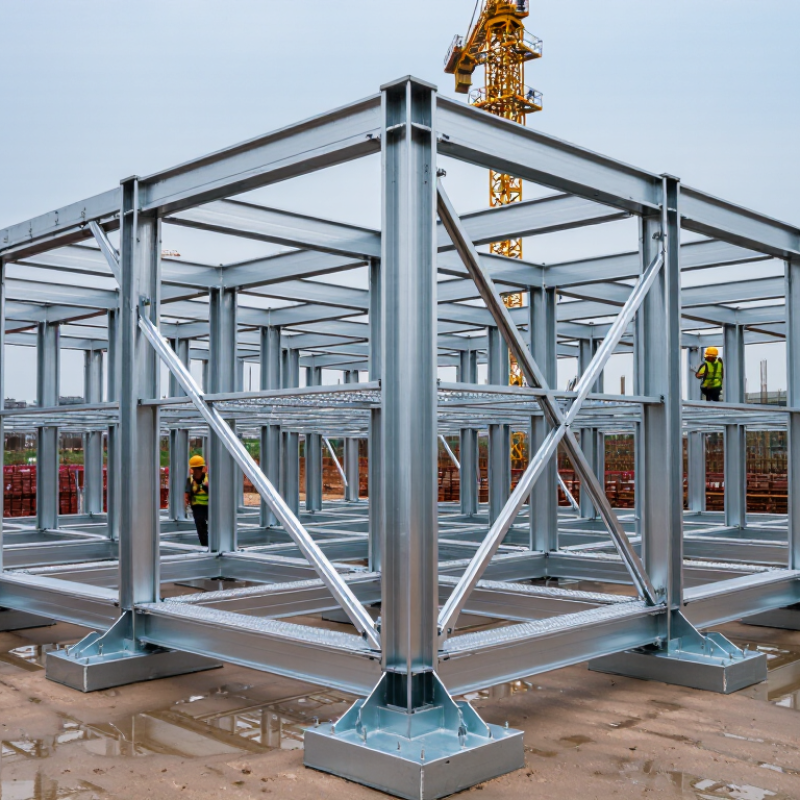
What Defines a Workhorse Scaffolding System?
What Is the Best Workhorse Scaffolding from China?
What Defines a Workhorse Scaffolding System?
A workhorse scaffolding system earns trust through repeated, demanding use. It must support workers, tools, and materials without feeling unstable. On active construction sites, small details matter. A firm locking mechanism, accurate frame dimensions, and evenly welded joints reduce daily adjustments.
In my experience, practical design often matters more than impressive specifications. Workers need platforms that assemble quickly, remain level, and resist movement on uneven ground. Galvanized steel can help protect components from moisture and frequent handling. Clear load markings also support safer planning. They should be easy to read from ground level.
Durability begins with quality control, not advertising. Reliable manufacturers inspect tube thickness, weld penetration, surface treatment, and component fit. They should also provide traceable test records and clear installation guidance. Local regulations still govern every project, so imported equipment requires careful verification before use.
A workhorse is not always the lightest system. Very light parts may save effort but sacrifice stiffness. Heavier components can create transport and handling challenges. That trade-off deserves honest review. I have seen crews lose time when supposedly universal parts did not fit correctly. Field trials, sample inspections, and feedback from experienced users reveal weaknesses that catalogs often hide. Clean storage helps, too..`|`
What Is the Best Workhorse Scaffolding from China? - What Defines a Workhorse Scaffolding System?
| Evaluation Dimension | Practical Workhorse Benchmark | Why It Matters on Site | Verification Method |
|---|---|---|---|
| Primary steel tube size | Approximately 48.3 mm outside diameter, with wall thickness commonly around 3.2–3.6 mm for modular scaffolding components. | This size is widely used for scaffold standards, ledgers, braces, and couplers, making replacement parts easier to source. | Check tube diameter and wall thickness using calibrated calipers and wall-thickness gauges at several points. |
| Steel grade suitability | Q235 or Q355 structural steel may be specified, provided the selected grade matches the engineering design and applicable standard. | Adequate yield strength and consistent material quality help the system withstand repeated assembly, working loads, and site impact. | Request material certificates, heat numbers, chemical analysis, and tensile-test results. Do not rely on paint color alone. |
| Load-class capability | Design should clearly state the permitted service load. EN 12811-1 working-platform load classes range from 0.75 to 6.00 kN/m². | A genuine workhorse system supports routine masonry, finishing, maintenance, or heavier material-handling tasks without ambiguous capacity claims. | Review design calculations, allowable bay configurations, platform class, ledger lengths, height limits, ties, and bracing requirements. |
| Connection system | Positive-lock modular connections, such as rosette-and-wedge or cup-type connections, with repeatable engagement and visible locking action. | Fast, tool-efficient connections reduce assembly time while maintaining predictable load transfer between standards and ledgers. | Inspect fit-up, wedge seating, weld integrity, connection clearance, and resistance to accidental release during handling. |
| Dimensional flexibility | A practical modular range commonly includes bay lengths from about 0.73 m to 3.07 m and multiple platform widths, subject to the system design. | Several bay and lift options allow the scaffold to follow façades, plant rooms, stairwells, and irregular work areas. | Confirm the manufacturer’s dimensional matrix and verify that each configuration has a corresponding load table or engineering calculation. |
| Corrosion protection | Hot-dip galvanizing is generally preferred for repeated outdoor use; coating requirements should be specified by the applicable galvanizing standard. | A durable zinc coating reduces rust, extends service life, and lowers maintenance needs in humid or coastal environments. | Use coating-thickness measurements, visual inspection, adhesion checks where appropriate, and batch documentation referencing ISO 1461 or GB/T 13912. |
| Base adjustment | Adjustable base jacks should provide sufficient thread engagement, a stable base plate, and a clearly defined adjustment limit. | Reliable leveling improves stability on uneven slabs while preventing excessive jack extension that can weaken the support arrangement. | Check thread condition, plate dimensions, minimum engagement, maximum extension, and the system’s approved base arrangement. |
| Bracing and stability | Diagonal bracing, ties, stabilizers, and suitable foundation details must be included in the engineered layout rather than treated as optional accessories. | Most scaffold failures result from instability, inadequate tying, poor foundations, overloading, or unauthorized changes—not simply from insufficient steel strength. | Require a site-specific erection plan covering tie spacing, bracing pattern, wind exposure, foundation bearing, access, and guardrails. |
| Platform and access safety | Platforms should be secured against uplift and displacement and equipped with guardrails, toe boards, safe access, and self-closing access gates where required. | A workhorse system must protect workers during normal movement, material handling, and changing work activities. | Check platform locking, slip resistance, openings, guardrail height, toe-board provision, access width, and local regulatory compliance. |
| Fabrication quality | Uniform welds, controlled distortion, accurate rosette or cup placement, clean tube ends, and consistent component dimensions. | Accurate fabrication improves interchangeability and prevents difficult assembly, excessive play, and uneven load transfer. | Use incoming inspection, dimensional sampling, weld visual checks, non-destructive testing where specified, and load testing of representative assemblies. |
| Interchangeability and inventory | A limited, standardized component family with clear part identification and compatible replacement items. | Fewer unique parts reduce stockholding, simplify training, and shorten downtime when components are lost or damaged. | Confirm a component schedule, tolerances, spare-parts list, compatibility rules, and identification markings on each item. |
| Traceability and documentation | Complete technical files should include drawings, material certificates, load tables, inspection records, installation instructions, and maintenance guidance. | Clear documentation turns a collection of steel parts into a controllable temporary-works system. | Verify batch records, inspection reports, revision-controlled drawings, test certificates, and instructions in the project’s working language. |
| Lifecycle value | Evaluate total cost over repeated cycles rather than purchase price alone: service life, repairability, transport density, labor, and replacement rate. | The best workhorse is dependable across many projects and retains useful value after repeated handling. | Compare cost per usable cycle, galvanized-service expectations, repair procedures, packing efficiency, and spare-part availability. |
Note: The dimensions and load values above are general industry benchmarks. Final selection, erection, alteration, and use must follow the applicable Chinese, international, and local safety standards together with project-specific engineering calculations.
Related Posts
-
How to Use Workhorse Scaffolding for Your Next Construction Project?
-
10 Essential Tips for Choosing the Right Workhorse Scaffolding?
-

How to Choose the Best Nonstop Scaffold for Your Projects?
-
How to Crank Up Scaffolding for Your Construction Projects?
-

7 Best EZ Scaffolding Suppliers for Global Buyers?
-

How to Effectively Use Non Stop Crank Up Scaffolding for Your Construction Projects