What is a strong base anion resin and how is it used?
The use of strong base anion resin in water treatment has gained significant attention in recent years. According to a 2022 market report, the demand for these resins is projected to grow by 5.4% annually. Strong base anion resins play a crucial role in removing impurities from water. They are effective in treating both industrial and municipal water supplies.
Dr. Emily Chen, a leading expert in water purification technologies, emphasizes the importance of this resin. She states, "strong base anion resins are pivotal for achieving higher purity levels in water treatment systems." This resin type is designed to handle various anionic contaminants, making it versatile.
However, challenges remain. The resin's performance can degrade over time, requiring careful maintenance. Adoption in some sectors is slow due to cost concerns. Thus, ongoing research and development are essential for advancing their effectiveness and accessibility. A deeper understanding of strong base anion resin will help in addressing these issues and improving water quality.
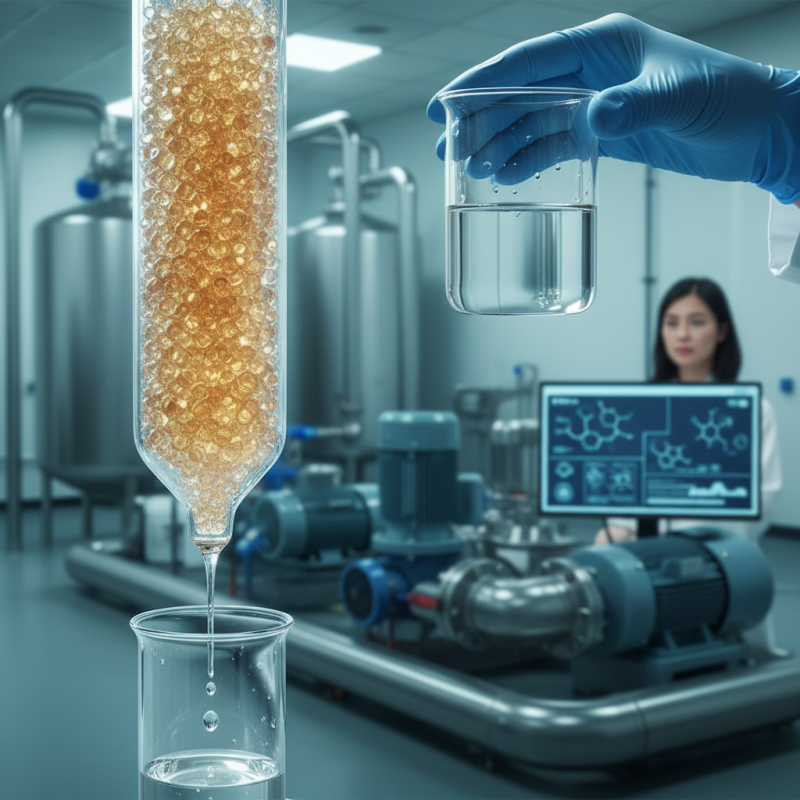
Definition and Characteristics of Strong Base Anion Resin
Strong base anion resins are vital in water treatment processes. They consist of a polymer matrix that has high capacity for ion exchange. These resins are capable of exchanging negatively charged ions. Common applications include demineralization and waste water treatment. According to the latest industry reports, strong base anion resins can achieve ion exchange capacities that exceed 1.5 meq/mL.
The properties of strong base anion resins depend on their chemical structure. They typically contain quaternary ammonium groups, which provide high stability. Such resins are resistant to degradation under extreme conditions. However, they may not perform optimally with certain organic compounds. It’s important to evaluate their compatibility in specific applications.
Data from technical reviews suggests that their regeneration efficiency can vary. While some resins show excellent regeneration capabilities, others may lead to increased operational costs. This highlights the necessity for regular performance assessment. Using strong base anion resins brings efficiency but also demands careful handling to maximize benefits. Continuous research is essential to adapt these materials to emerging challenges in water treatment.
What is a Strong Base Anion Resin and How is it Used?
| Property | Description |
| Definition | A strong base anion resin is anionic polymer used in various separation and purification processes. |
| Composition | Made from a cross-linked polymer matrix typically containing quaternary ammonium functional groups. |
| Ion Exchange Capacity | High ion exchange capacity suitable for removing a wide range of anions. |
| Applications | Used in water treatment, deionization, and various chemical processes. |
| Advantages | Efficient anion removal, reusable, and can operate under various pH conditions. |
| Regeneration | Regenerated using strong base solutions, restoring its anion exchange capacity. |
Types of Strong Base Anion Resins and Their Properties
Strong base anion resins are essential in various applications, particularly in water treatment. These resins are made from polymeric materials that can exchange anions. They possess high capacity for ion exchange. This makes them effective in removing harmful substances from water.
Different types of strong base anion resins exist. They vary in terms of their functionality and structure. For example, quaternary ammonium-based resins are widely used due to their quaternary structure. This structure allows for greater stability and efficiency. Other resins may include those modified for specific uses, such as removing nitrates or sulfates.
The effectiveness of strong base anion resins can be impacted by several factors. These include pH levels and temperature. It’s critical to monitor these parameters closely. Not everyone understands the nuances of these resins. Users may overlook how selectivity affects processing speeds. Thus, understanding these resins is crucial for optimal results.
Applications of Strong Base Anion Resin in Water Treatment
Strong base anion resins play a critical role in water treatment processes. They are often used in deionization systems. These resins effectively remove anions like sulfate, nitrate, and chloride from water. By selecting the right resin, you can achieve high purity levels.
In industrial applications, strong base anion resins help in producing ultra-pure water for pharmaceuticals. They are also used in power generation, electronics, and food processing. This versatility highlights their importance in various sectors. However, the choice of resin depends on specific needs and water chemistry.
**Tips:** When using these resins, monitor the water quality regularly. Proper maintenance extends resin life. It’s also essential to regenerate the resin appropriately to maintain performance. Consideration of factors like flow rates and temperatures can optimize results. Effective use requires commitment and careful planning, yet many still overlook these aspects.
Regeneration and Maintenance of Strong Base Anion Resins
Strong base anion resins are essential in various industries for water treatment and purification. Their effectiveness relies heavily on proper regeneration and maintenance. Regeneration is the process where resins are restored to their original capacity by replacing captured anions. This ensures that the resin continues to remove impurities effectively.
Regular maintenance of strong base anion resins can significantly extend their lifespan. According to industry studies, resins can lose up to 30% of their efficiency without proper care. Users should monitor pH levels closely. The absence of routine checks may lead to subpar performance. Refreshing the resin with appropriate chemicals helps maintain its effectiveness. Most industry experts recommend regenerating the resin based on the volume of water treated or specific contaminant levels.
Additionally, improper handling during regeneration can create issues. For instance, an unsuitable chemical concentration may damage the resin structure. Some studies indicate that nearly 20% of resin failures result from inadequate maintenance practices. Ensuring thorough training for operators in handling these materials is crucial. Hence, investment in proper training and maintaining consistent practices can yield better performance and longevity.
Strong Base Anion Resin Performance
This bar chart illustrates the performance metrics of strong base anion resins. It shows the initial exchange capacity, capacity after regeneration, and performance drop percentage after in-use conditions, providing insights into the maintenance and regeneration needs of these resins.
Comparison with Other Ion Exchange Resins
Strong base anion resins are crucial in ion exchange processes. They excel in removing anions from water. This makes them suitable for various applications, like water treatment and chemical processing. Unlike weak base resins, strong base variants operate effectively over a broader pH range. This feature enhances their efficiency in different environments.
When comparing strong base anion resins to other ion exchange resins, certain distinctions emerge. For instance, weak base resins might not handle strong acidic conditions well. They require more specific conditions. This could lead to inefficiencies in some settings. Some users might find that strong bases provide more reliable results, especially in high-demand scenarios. However, these resins can also be more expensive and complex to regenerate.
Users should be mindful of a balance between cost and efficiency. Strong base anion resins offer advantages in performance but may involve higher expenditures. Proper training is essential for effective usage. Mismanagement can lead to subpar results, like incomplete anion removal. Regular monitoring is key, ensuring the resins operate at peak performance. Everything seems perfect on paper, but real-world results can vary.