Choosing the right Wood Panels can shape a project’s strength, appearance, cost, and lifespan. A cabinet door, wall feature, or workshop bench may need completely different panel properties. Plywood often suits structures that need strength and screw-holding power. MDF provides a smooth surface for painted furniture. Solid wood panels bring natural grain, but they can expand and contract with humidity. Small mistakes show later.
The best choice begins with the project’s real conditions. Measure the expected load, moisture exposure, panel thickness, edge treatment, and finishing method. A bathroom vanity needs better moisture resistance than a dry bedroom shelf. A large wall panel may require stable support to prevent bowing. Check product specifications, emission ratings, core construction, and manufacturer guidance before buying. These details are more reliable than appearance alone.
Hands-on experience also matters. A beautiful panel can fail when its edges are poorly sealed or its fasteners are unsuitable. I have learned that “water-resistant” does not always mean waterproof. That distinction deserves attention. Budget should be considered, but replacing swollen or warped material costs more. Experienced builders compare samples under real lighting and inspect edges, flatness, and surface consistency. Still, no single panel works for every project. Climate, tools, skill level, and maintenance plans can change the decision. This guide explains how to evaluate Wood Panels with practical judgment, dependable information, and room to reconsider early assumptions.
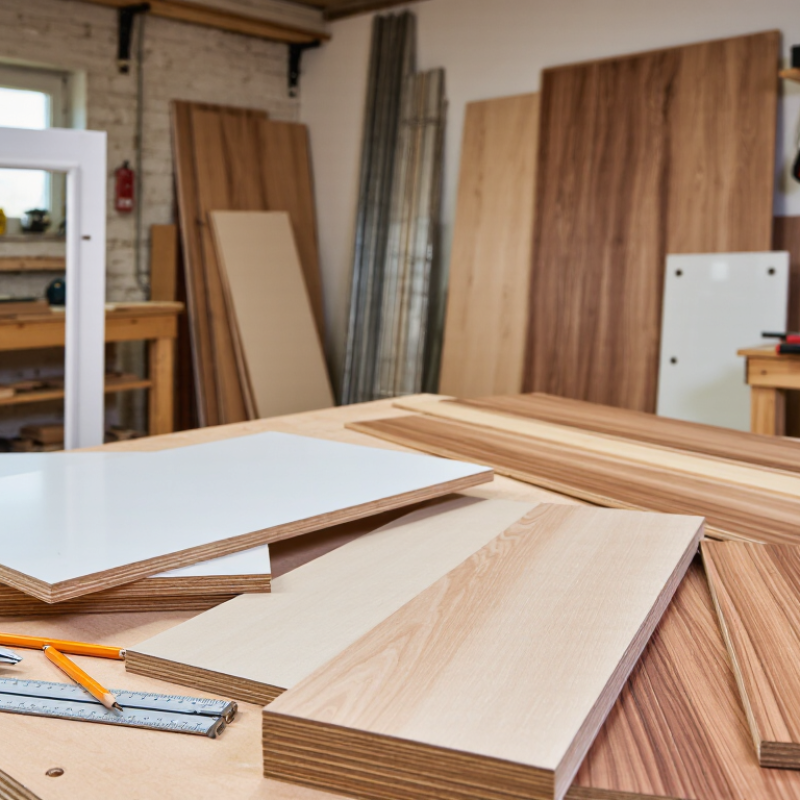
Choosing a wood panel starts with understanding its structure, not its appearance. Solid wood offers natural grain, strength, and repairability. However, it can expand or shrink with seasonal humidity. Plywood uses layered veneers, creating strong panels with better dimensional stability. Its cross-grain construction helps resist warping.
MDF is made from refined wood fibers and produces a smooth, paint-ready surface. It cuts cleanly, but its edges can absorb moisture and crumble without proper sealing. Particleboard uses larger wood particles and usually costs less. It works for dry indoor furniture, though it holds screws less reliably than plywood. OSB has visible strands and strong structural performance, but its rough surface may need extra finishing.
Moisture changes the decision. In a bathroom, choose a panel rated for damp conditions and protect every exposed edge. In a workshop, check thickness, span, screw holding, and the panel’s actual flatness. I once selected a smooth panel for a shelving project and ignored its weak edge. The shelves looked excellent but needed reinforcement later. That mistake still influences my material checks. Ask for technical data, emissions information, and storage guidance from a qualified supplier. Let panels acclimate indoors before cutting. Small details matter. Always inspect the cut edge.
Choosing wood panels starts with the project, not the sample’s appearance. A kitchen wall faces steam, splashes, cleaning, and temperature changes. A bedroom cabinet has different demands, including screw holding, surface feel, and stable dimensions. Write these conditions down before comparing panel types. This small step prevents an attractive but unsuitable choice. Solid wood, plywood, particleboard, and fiberboard each behave differently under load and moisture. Panel density affects weight, edge strength, machining, and fastening performance. Moisture exposure matters even in rooms that seem dry.
In practice, I check the panel’s intended environment, thickness, core construction, and edge treatment. For shelving, span and load matter more than a perfectly smooth face. For painted doors, surface consistency and low movement may be more important. In humid areas, sealed edges and suitable moisture resistance deserve close attention. Ask suppliers for technical data, emissions information, and recommended fixing methods. Then inspect a cut edge. Voids, loose fibers, or uneven layers can reveal weaknesses. I have learned that one test piece is rarely enough. A panel can machine well but disappoint after finishing. Test drilling, painting, and assembly on scrap first.
How to Choose the Right Wood Panels for Your Project?
Evaluating Thickness, Size, Grain, and Surface Finish
I usually begin by matching panel thickness to the project’s load and fixing method. Thicker panels resist bending but add weight and require deeper edge support. For shelves, cabinets, or worktops, measure the unsupported span before choosing. Thin panels suit drawer bottoms and backing pieces, but they can flex unexpectedly. Measure twice.
Panel size also affects waste, transport, and joint placement. Check the full sheet against your workshop space and cutting equipment. Long panels need careful support to prevent damage during handling. Grain direction matters when appearance and strength are important. Align the grain with the visual flow or expected stress. Cross-grain cuts may expose edges more clearly. I once selected a wide panel without checking its grain pattern, and the finished door looked unbalanced.
Surface finish should match the final use, not only the showroom appearance. Smooth panels need less preparation before painting, while textured surfaces may hide minor marks. For clear finishes, inspect the grain under strong side lighting. Look for dents, open pores, and uneven color. Small flaws matter. Sand a sample area before treating the whole panel. Some finishes darken the wood more than expected, so test the color on an offcut. Allow extra material for trimming, defects, and one imperfect cut.
| Panel Type | Common Thickness | Typical Sheet Size | Grain or Face Pattern | Surface Finish Options | Best-Suited Applications | Key Selection Considerations |
|---|---|---|---|---|---|---|
| Plywood | 6–25 mm | Commonly 1,220 × 2,440 mm | Visible face veneer with alternating cross-laminated layers | Sanded, textured, overlaid, or unfinished veneer | Cabinetry, furniture, wall panels, shelving, and structural work | Choose a suitable grade for appearance, moisture exposure, and load requirements. Cross-laminated construction generally improves dimensional stability. |
| MDF | 3–30 mm | Commonly 1,220 × 2,440 mm | Uniform, grain-free fiber structure | Raw, primed, painted, veneered, or laminated | Painted furniture, cabinet doors, routed details, shelving, and decorative wall features | Its smooth face is easy to paint and machine, but standard MDF should be protected from prolonged moisture. |
| Particleboard | 9–30 mm | Commonly 1,220 × 2,440 mm | Visible wood-particle texture when unfinished | Melamine-faced, laminated, veneered, or raw | Flat-pack furniture, interior shelving, countertops, and cabinet components | A cost-effective option for dry interiors. Seal exposed edges carefully because the core can absorb moisture. |
| OSB | 9–25 mm | Commonly 1,220 × 2,440 mm | Large oriented wood strands with a directional appearance | Raw, sanded, sealed, or coated | Roof and wall sheathing, subfloors, workbenches, and modern industrial interiors | Select the appropriate performance class for structural use and humidity conditions. The strand pattern is more prominent than a veneer grain. |
| Solid Wood Panel | 18–40 mm | Project-specific; commonly up to about 600 × 2,400 mm | Natural species-specific grain, knots, and color variation | Planed, sanded, brushed, stained, oiled, or clear-coated | Tabletops, doors, feature walls, furniture, and premium interior details | Allow for seasonal movement by considering moisture content, board width, grain direction, and suitable joinery. |
| Veneer-Faced Panel | 9–25 mm | Commonly 1,220 × 2,440 mm | Natural wood veneer with matched, slip-matched, or plain-sliced grain | Raw veneer, stained, lacquered, oiled, or factory-finished | Feature cabinetry, wall cladding, doors, furniture, and built-in storage | Check veneer thickness, grain matching, edge treatment, and whether the finish is suitable for cleaning and wear. |
| Melamine-Faced Panel | 12–25 mm | Commonly 1,220 × 2,440 mm | Printed woodgrain, solid color, or decorative pattern | Matte, satin, textured, or lightly embossed hard surface | Kitchen cabinets, wardrobes, office furniture, shelving, and utility storage | Offers a consistent appearance and easy cleaning. Protect cut edges and verify abrasion and moisture resistance for demanding areas. |
| Exterior-Grade Wood Panel | 9–25 mm | Commonly 1,220 × 2,440 mm | Veneer or strand pattern, depending on the core material | Sealed, painted, textured, or film-faced | Covered outdoor structures, exterior lining, transport fittings, and humid service areas | Confirm the panel's intended exposure rating. Seal faces, edges, and penetrations, and avoid assuming that “water-resistant” means suitable for permanent wet exposure. |
When comparing wood panels, match the panel to its environment, not only its appearance. Plywood suits demanding structures because its cross-laminated veneers resist splitting and bending. MDF offers a smooth surface for painted furniture, but exposed edges absorb water quickly. The USDA Forest Products Laboratory’s Wood Handbook states that decay fungi generally need wood moisture above 20 percent. Moisture changes everything. In kitchens, bathrooms, or workshops, sealed edges and raised clearances can prevent expensive failures. For dry interiors, lower-cost particleboard may be reasonable when loads remain modest.
Budget is not price. A cheaper sheet can create higher cutting, finishing, and replacement costs. Check thickness, span, screw-holding strength, and surface quality before ordering.
A small sample test is often wiser than trusting a catalogue. I would not pretend that one panel wins every comparison. The best choice can still be slightly over-specified.
Sustainability needs evidence, not green-looking language.
The FAO Global Forest Resources Assessment 2020 reported a 178 million hectare decline in global forest area between 1990 and 2020, although the loss rate slowed during the last decade. Select panels with documented fiber sources, recycled content, and verified life-cycle information where available. Formaldehyde emissions also deserve attention, especially indoors; request compliance documentation and ventilate after installation. Maintenance should be planned early. Recoating, edge repairs, and dry storage extend service life, but neglected moisture can defeat a carefully chosen material. Details matter.
Choosing wood panels starts with more than an attractive surface. Check the core, thickness, edges, and overall flatness before ordering. A dense, even core should show few voids or loose fibers. Run your hand across the face. It should feel consistent, not swollen or brittle. Measure several sheets, because small thickness differences can complicate joined surfaces. Ask for moisture information when panels will enter humid rooms. I once trusted a clean-looking sample and overlooked a warped sheet. That mistake changed my inspection routine.
Compatibility depends on more than appearance. Match the panel’s movement to the room’s humidity and supporting frame. Interior panels may fail near bathrooms if they cannot tolerate repeated moisture. Confirm whether the surface accepts your adhesive, paint, screws, or fasteners. A finish can look even yet peel from a poorly prepared face. Check substrate flatness with a straightedge before installation. Uneven framing transfers stress into the panel. Leave suitable clearance for expansion, especially along floors and corners. Do not assume every wall is square.
Installation quality often decides whether a good panel performs well. Store sheets flat, supported, and protected from sudden temperature changes. Bring them indoors after wet work has dried and ventilation is stable. Use clean tools, and avoid dragging edges across concrete. Fasten at the recommended spacing, keeping heads flush rather than buried. Plan joints around lighting, doors, and visible sightlines. A small test installation can reveal unexpected color, grain, or adhesion problems. I still allow extra material for defects and mistakes. That allowance feels wasteful sometimes. It is usually cheaper than redoing a finished wall.