Elevating Scaffolding – Masonry Scaffolding – Motorized Scaffolding

Elevating Scaffolding – Masonry Scaffolding – Motorized Scaffolding
What Is a Crank Scaffold and How Does It Work?
A crank scaffold is a manually adjustable work platform designed for controlled height changes. It uses a crank mechanism, screw jack, or winding system to raise and lower the platform. Unlike fixed scaffolding, it can follow changing work levels without complete dismantling. That difference matters on façades, ceilings, industrial maintenance projects, and restoration sites.
The working principle is practical. Workers turn the crank, which moves a mechanical lifting system through connected supports. The platform rises gradually, often with less physical effort than manual repositioning. Locking devices, stabilizers, guardrails, and properly installed outriggers help keep the structure steady. John Henshaw, a former OSHA administrator and respected occupational-safety authority, stated, “Safety is not a priority; safety is a value.” That idea fits crank scaffold use because smooth movement never replaces inspection, training, or judgment.
Before operation, a qualified person should examine the frame, cables, fasteners, wheels, brakes, and base conditions. The platform should remain level during adjustment. Uneven ground can create a small tilt that becomes a serious hazard at height. Workers also need to follow the manufacturer’s instructions and applicable workplace requirements. The crank may feel simple, but the system is not forgiving. I may be oversimplifying its mechanics here, because different models use different lifting arrangements. Some depend on screw drives, while others use synchronized winches. That uncertainty is exactly why model-specific guidance matters. A reliable understanding of crank scaffold design begins with its components, continues through safe setup, and develops through careful daily use.
Crank Scaffold: Definition and Main Components
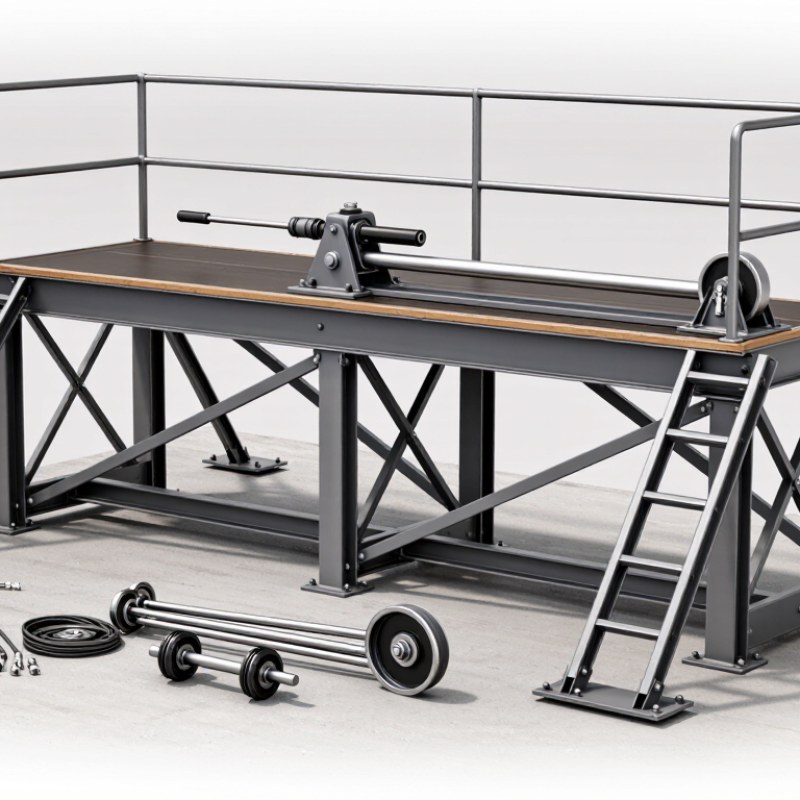
A crank scaffold is a mobile work platform with a hand-operated lifting mechanism. Workers turn a crank to raise or lower the platform along vertical masts. This adjustment helps place tools and people at a practical working height. Unlike a fixed scaffold, it can move between tasks when its casters are unlocked and the surface is suitable.
Its main components include the platform, mast sections, crank assembly, cables or chains, guardrails, and stabilizing outriggers. The platform carries workers and materials, while the masts guide vertical movement. The crank transfers force through the lifting system. Guardrails reduce fall exposure, but they do not replace careful positioning. Outriggers widen the support footprint and improve stability, especially when the platform rises.
On a real worksite, I would inspect pins, cables, brakes, and locking parts before use. A damaged cable may look minor but can affect smooth lifting. The scaffold should stand on firm, level ground, with wheels locked before anyone climbs. Keep materials evenly distributed across the deck. Never exceed the stated load rating or remove protective components to gain extra space. Crank systems can vary more than expected, so the equipment manual deserves attention. I have seen workers focus on the handle and overlook the base. That mistake needs reconsideration. Height changes should be controlled, and people should stay clear of moving parts. Regular checks by a trained person support safer, more reliable operation.
What Is a Crank Scaffold and How Does It Work? - Crank Scaffold: Definition and Main Components
| Dimension | Component or Feature | Description | Typical Data or Operating Principle | Safety Consideration |
|---|---|---|---|---|
| Definition | Crank scaffold | A manually adjustable scaffold that uses a crank-operated lifting mechanism to raise or lower a working platform. | The platform height is changed mechanically rather than by rebuilding the scaffold frame. | Use only within the rated capacity and approved operating height. |
| Primary application | Elevated access work | Used for work such as installation, inspection, painting, maintenance, and finishing where a variable working height is useful. | Suitable for relatively level, firm surfaces and tasks requiring frequent height adjustment. | It is not a substitute for a crane, hoist, or passenger elevator. |
| Load-supporting surface | Platform or work deck | The horizontal surface on which authorized workers, tools, and materials are positioned. | The allowable load includes workers, equipment, and materials together; the exact rating is specified for the individual unit. | Keep the deck clear, evenly loaded, and fully secured before lifting. |
| Vertical support | Mast, uprights, or scaffold frame | The structural members that guide the platform and transfer working loads to the base. | The frame must remain plumb and correctly assembled throughout the operating range. | Do not operate with bent, cracked, loose, or missing structural members. |
| Height adjustment | Crank, winch, and lifting drive | The operator turns the crank, which drives a winding or mechanical lifting system connected to the platform. | Clockwise or counterclockwise movement normally raises or lowers the deck according to the unit’s instructions. | Operate smoothly; never force the crank or bypass the locking mechanism. |
| Lifting connection | Wire rope, chain, screw, or rack mechanism | Transfers mechanical movement from the crank assembly to the platform or lifting carriage. | The mechanism must be compatible with the scaffold design and rated for its maximum working load. | Inspect for corrosion, fraying, deformation, abnormal wear, and proper attachment. |
| Fall protection | Guardrails, midrails, and toeboards | Protective barriers around exposed platform edges help prevent falls and dropped objects. | Guardrail configuration and dimensions must comply with the applicable local safety standard. | Install all required barriers before allowing work at height. |
| Mobility | Casters or wheels | Allow the scaffold to be repositioned when the platform is lowered and the unit is unoccupied. | Locking casters prevent unintended movement during work. | Never move a raised or occupied scaffold unless the equipment is specifically designed and approved for that operation. |
| Stability | Outriggers, stabilizers, and base supports | Increase the support footprint and help resist tipping, especially at greater platform heights. | The required configuration depends on the scaffold height, base condition, and manufacturer’s design. | Set on a firm, level surface and use all required stabilizing components. |
| Bracing | Cross braces and horizontal braces | Reduce racking and maintain the geometry and rigidity of the scaffold structure. | Braces must be installed in the positions required by the assembly instructions. | Do not remove or alter braces while the scaffold is in service. |
| Operating procedure | Raise, secure, work, and lower | The operator checks the setup, adjusts the deck, engages the lock or brake, performs the work, and lowers the platform when finished. | Adjustment should be gradual, controlled, and performed only from the approved operating position. | Follow the equipment manual, site rules, inspection requirements, and applicable regulations. |
| Inspection requirements | Pre-use inspection | A competent person checks the platform, frame, crank system, lifting connection, brakes, braces, guardrails, and base condition. | Inspection is required before use and after events that could affect structural integrity or stability. | Remove defective equipment from service until it is repaired and approved for use. |
Note: Dimensions, load capacities, maximum working heights, and component arrangements vary by scaffold design. Always verify the equipment rating and operating instructions before use.
Related Posts
-
How to Buy Non Stop Crank Up Scaffolding?
-
China Top 10 Crank Scaffold Manufacturers?
-
How to Choose the Best Crank Up Scaffolding in China?
-
Top Non Stop Crank Up Scaffolding Suppliers Worldwide
-

How to Choose the Right Crank Scaffold for Your Next Project?
-
China Top Crank Up Scaffolding Manufacturers and Suppliers