How to Choose the Right Crank Scaffold for Your Construction Project?
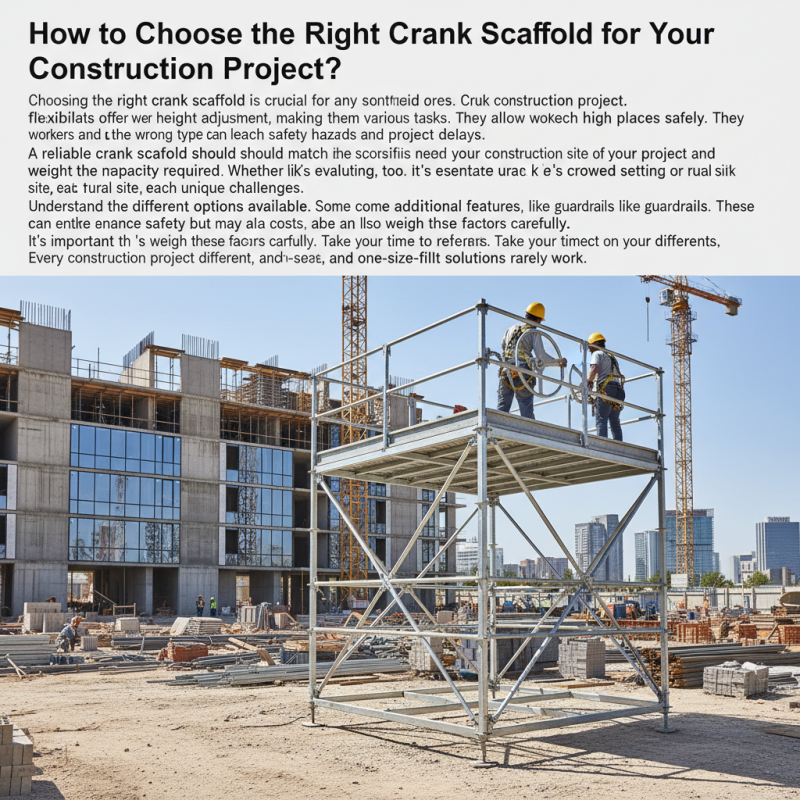
Choosing the right crank scaffold is crucial for any construction project. Crank scaffolds offer flexibility and height adjustment, making them suitable for various tasks. They allow workers to reach high places safely and efficiently. However, selecting the wrong type can lead to safety hazards and project delays.
A reliable crank scaffold should match the specific needs of your construction site. Consider factors like the height of your project and the weight capacity required. It's essential to evaluate the environment, too. Whether it’s a crowded urban setting or a rural site, each presents unique challenges.
Understand the different options available. Some crank scaffolds come with additional features, like guardrails. These can enhance safety but may also add extra costs. It’s important to weigh these factors carefully. Take your time to reflect on your specific requirements. Every construction project is different, and one-size-fits-all solutions rarely work.
Understanding the Basics of Crank Scaffolds in Construction Projects
Crank scaffolds play a vital role in construction projects. They are adjustable and provide excellent support for workers. Understanding their mechanics is key. A report by the Scaffold and Access Industry Association states that the use of crank scaffolds can increase job site efficiency by up to 30%. This statistic highlights their importance for many projects.
Choosing the right crank scaffold involves understanding specific project needs. Factors such as height requirements and weight capacities must be evaluated. A poorly chosen scaffold can lead to safety hazards. According to the Occupational Safety and Health Administration, around 70% of scaffolding accidents are linked to improper setup or use. This data underlines the need for thorough training and careful planning.
Regular inspections of crank scaffolds are essential. Wear and tear can compromise their stability. Noticing rust, bent parts, or loose connections is critical. The American National Standards Institute recommends inspecting scaffolds at least once a week. Yet, many workers overlook this step, leading to potential accidents. Such oversights reflect the ongoing need for improvement in safety standards on construction sites.
Identifying Your Project's Specific Requirements for Scaffolding
Choosing the right crank scaffold starts with understanding your project's specific needs. Each construction site presents unique challenges. A detailed site assessment is essential to determine height, load capacity, and accessibility. According to the Scaffold Industry Association, improper scaffold selection can lead to accidents that result in injuries.
Consider the types of tasks you’ll perform. Are you doing interior work, or is it a high-rise project? Knowing the materials you’ll be working with is crucial. Reports show that at least 30% of scaffolding failures stem from inadequate load calculations. It’s vital to have an accurate idea of how much weight each section will bear.
Environment also plays a significant role. Is your project indoors or outdoors? Wind factors must be addressed, particularly on elevated scaffolds. Data from safety studies highlight that over 50% of scaffold-related accidents occur due to environmental issues. Do not overlook regular inspections. They reveal hidden weaknesses in the structure over time. Adapting your scaffold choice based on these reflections can enhance safety and efficiency.
How to Choose the Right Crank Scaffold for Your Construction Project?
| Project Type |
Height Requirement (ft) |
Load Capacity (lbs) |
Surface Type |
Edge Protection Needed |
| Residential Renovation |
10 |
500 |
Wood |
Yes |
| Commercial Building |
30 |
1500 |
Concrete |
Yes |
| Industrial Maintenance |
50 |
2000 |
Metal |
Yes |
| Bridge Construction |
40 |
3000 |
Composite |
Yes |
| Historical Restoration |
25 |
800 |
Stone |
No |
Evaluating Different Types of Crank Scaffolds Available in the Market
Choosing the right crank scaffold can greatly impact your construction project. There are several types available in the market, each designed for specific tasks. You might see adjustable crank scaffolds and mobile versions. Both offer unique benefits depending on your needs.
Adjustable crank scaffolds are versatile. They allow height adjustments while providing stability. Mobile crank scaffolds, however, enable easy movement on site. They are useful for projects that require frequent relocation. However, one must consider the terrain and load capacity before making a decision.
Don't overlook the materials used in these scaffolds. Some are made of aluminum, while others are steel. Aluminum is lightweight but may not support heavy equipment. Steel offers strength but can be harder to maneuver. Reflect on the scope of your project and test some models before committing. Each type has its strengths and weaknesses. Finding the perfect match requires both research and hands-on experience.
Assessing Budget Constraints and Cost-Effectiveness of Scaffolding Options
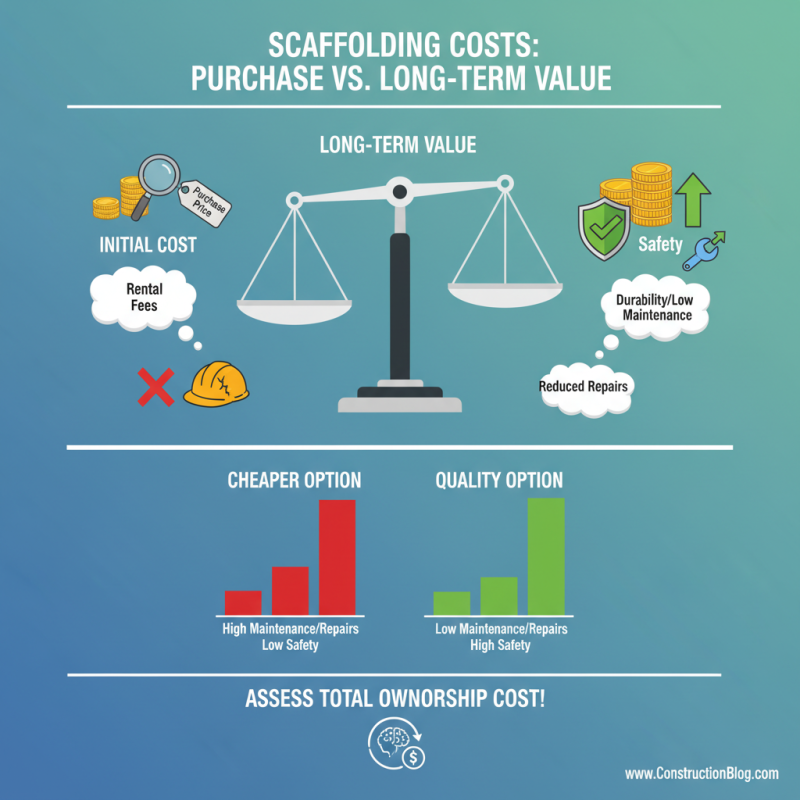
When it comes to scaffolding options, budget constraints heavily influence decisions. It's vital to assess the overall costs. Think about not only the purchase price but also maintenance and rental fees. Sometimes, a cheaper option can lead to higher long-term costs due to frequent repairs or inadequate safety measures.
Consider the specific needs of your construction project. If you have multiple stories to reach, a sturdy and more expensive scaffold might be necessary. Cheap scaffolds may not support heavy loads safely. Also, evaluate what materials work best for your site conditions. Metal scaffolding generally offers better durability than wood, which can be more prone to damage. However, wood might be lighter and easier to set up in some situations.
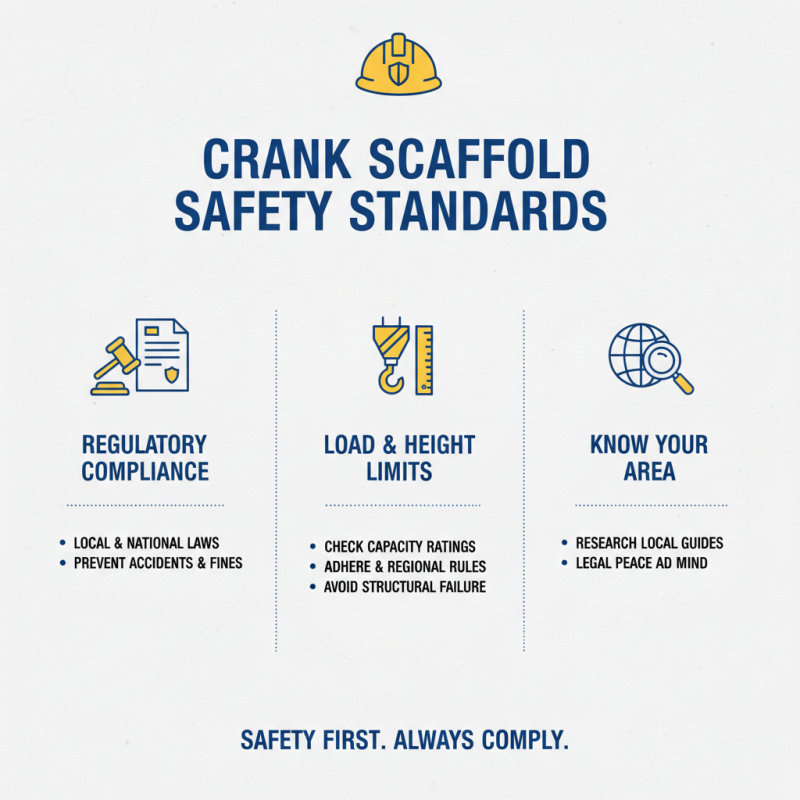
It's crucial to reflect on potential risks. Choosing a scaffold that doesn't meet the safety standards can lead to accidents. Many projects fall behind schedule due to accidents linked to poor-quality scaffolding. Rethink your approach to balance cost and effectiveness. Prioritize not just immediate savings but long-term value and safety.