How to Effectively Use Non Stop Crank Up Scaffolding for Your Construction Projects
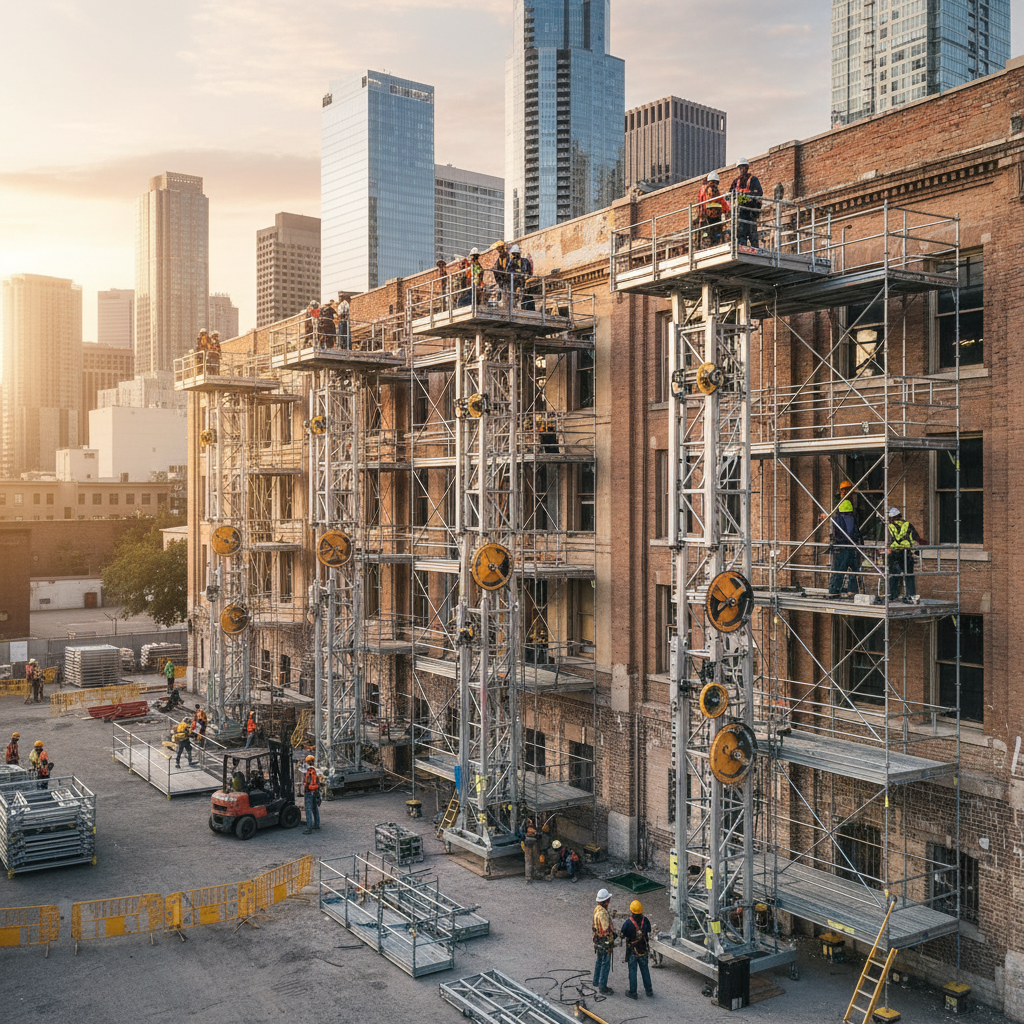
In the ever-evolving landscape of construction projects, efficiency and safety are paramount. Among the various scaffolding options available, "non stop crank up scaffolding" stands out as a revolutionary solution designed to enhance productivity while ensuring worker safety at elevated heights. This innovative scaffolding system not only provides a stable working platform but also allows for seamless height adjustment, catering to the dynamic requirements of modern construction sites.
By incorporating non stop crank up scaffolding into your project, you can significantly reduce downtime and improve workflow, as this system can be easily adjusted without the need for dismantling or extensive manual labor. This versatility makes it particularly suitable for tasks that require constant elevation changes, such as facade work, painting, or installation of building components. Furthermore, its robust engineering and user-friendly design ensure that workers can operate efficiently, even in challenging environments.
In this article, we will explore the best practices for effectively utilizing non stop crank up scaffolding in various construction scenarios. From understanding its components to implementing safety measures and maintenance tips, we aim to provide you with comprehensive insights that will empower you to make the most of this advanced scaffolding solution in your next project.

Understanding Non Stop Crank Up Scaffolding: Key Features and Benefits in Construction
Non Stop Crank Up Scaffolding is becoming a game-changer in the construction industry, offering exceptional versatility and efficiency. This type of scaffolding allows workers to raise and lower platforms seamlessly, facilitating easy access to various project heights without the need for extensive reconfiguration. According to industry studies, projects utilizing this system can see productivity improvements of up to 30%, especially in large-scale renovations where adapting to fluctuating heights is crucial.
Key features of Non Stop Crank Up Scaffolding include its robust design, which can support significant load capacity while providing stability. The safety standards associated with this scaffolding are high; a report by the Scaffold and Access Industry Association indicates that effective use of such scaffolding systems can reduce job site accidents by approximately 25%. Furthermore, the time-saving benefits—allowing crews to work continuously without lengthy setup times—are invaluable. This means less downtime and more efficient project completion, an essential factor in a competitive construction environment.
Comparative Analysis: Non Stop Crank Up Scaffolding vs Traditional Scaffolding Systems
Non Stop Crank Up Scaffolding (NSCUS) has emerged as a game-changer in the construction industry, offering distinct advantages over traditional scaffolding systems. A comparative analysis reveals that NSCUS significantly enhances operational efficiency. According to a report by the Scaffolding Association, the use of NSCUS can reduce labor costs by up to 30%, largely due to the speed at which workers can adjust scaffold heights without the need for complex assembly and disassembly processes. This streamlined operation not only optimizes productivity but also minimizes downtime, which is crucial in fast-paced construction environments.
In addition to labor efficiency, safety is another critical factor where NSCUS outshines traditional methods. The Occupational Safety and Health Administration (OSHA) reports that construction sites utilizing modern scaffolding systems like NSCUS experience a 25% lower accident rate. This improvement can be attributed to the more stable and easier-to-maneuver design of NSCUS, which reduces the risks posed by external factors such as wind and weather. As construction projects increasingly prioritize worker safety, NSCUS not only meets regulatory requirements but also promotes a culture of safety on site.
Maximizing Efficiency: How Non Stop Crank Up Scaffolding Reduces Project Time by Up to 30%
Non Stop Crank Up Scaffolding has emerged as a game-changer in the construction industry, particularly in its capacity to enhance efficiency by reducing project time by up to 30%. According to a report by the Construction Industry Institute, implementing innovative scaffolding solutions can significantly decrease overhead costs, thereby facilitating a smoother workflow on-site. With the ability to adjust height quickly and safely, these scaffolding systems allow workers to focus on their tasks without wasting precious time setting up and taking down conventional scaffolding.
Tip: To maximize the benefits of Non Stop Crank Up Scaffolding, ensure that your team is trained in its proper usage. Regular training sessions can help workers become proficient with the equipment, leading to further time reductions and improved safety.
Moreover, data from the National Center for Construction Education and Research suggests that using advanced scaffolding solutions can minimize fall-related incidents by ensuring safer work environments. When workers can ascend to their jobs with ease, it translates to increased productivity and morale on the job site.
Tip: Always assess the specific needs of your project before selecting a scaffolding solution. Consulting with scaffolding experts can lead to tailored solutions that enhance both safety and efficiency.
Safety Standards and Best Practices for Using Non Stop Crank Up Scaffolding on Job Sites
When utilizing Non Stop Crank Up Scaffolding in construction projects, adhering to safety standards is paramount. According to the Occupational Safety and Health Administration (OSHA), falls are the leading cause of fatalities in the construction industry, accounting for approximately 33% of deaths annually. Implementing proper safety practices, such as ensuring that scaffolding is assembled and disassembled under the supervision of qualified personnel, significantly reduces the risk of accidents. Workers should also be trained to recognize hazards associated with scaffolding use, which is crucial for maintaining a safe work environment.
Furthermore, best practices for using Non Stop Crank Up Scaffolding include conducting regular inspections and maintenance checks to ensure structural integrity. The Scaffold & Access Industry Association (SAIA) emphasizes that scaffolding should be inspected daily before use and after any adverse weather conditions. It's also recommended to utilize guardrails and toeboards to prevent falls and objects from falling off the edges. By integrating these safety standards and best practices into daily operations, construction managers can promote a culture of safety and reduce the likelihood of incidents on job sites.
Cost-Benefit Analysis: Evaluating the ROI of Non Stop Crank Up Scaffolding in Large Scale Projects
Non-stop crank up scaffolding has emerged as a critical innovation in the construction industry, particularly for large-scale projects.
According to a report by the Occupational Safety and Health Administration (OSHA), the use of advanced scaffolding systems can reduce assembly time by up to 30%, leading to significant labor cost savings.
Moreover, with the capability to adjust height efficiently, these scaffolding systems enhance safety and worker productivity, which are essential factors when evaluating the return on investment (ROI) for construction businesses.
A cost-benefit analysis performed by the Construction Industry Institute (CII) indicated that projects utilizing non-stop crank up scaffolding could experience a 20% reduction in direct project costs over traditional methods.
This is largely due to decreased downtime and improved access to work areas, resulting in shorter project timelines.
Additionally, the data suggests that enhanced worker safety reduces the incidence of accidents, ultimately leading to lower insurance premiums and minimizing litigation expenses.
With these compelling figures, the ROI of non-stop crank up scaffolding becomes increasingly favorable, supporting its adoption in modern construction practices.