What Is the Best Crank Up Scaffolding in 2026?
Choosing the best crank up scaffolding in 2026 is less about finding the tallest frame and more about matching the lift to the work. A painter reaching a stairwell, a siding crew moving along a facade, and a maintenance technician under a warehouse roof need different platform dimensions and working heights. OSHA has estimated that about 2.3 million construction workers use scaffolds, and that better scaffold protection could prevent 4,500 injuries and 50 deaths each year. These are longstanding estimates, not a current product ranking. Still, they make one point clear: stability and safe access are not minor extras.
This guide compares crank up scaffolding by load rating, platform width, frame materials, wheel and outrigger setup, guardrails, locking hardware, and winch operation. It also considers transport and setup, because a heavy unit that fits the spec sheet can still be awkward on a tight site. Check manufacturer documentation and include workers, tools, and materials when assessing the rated capacity. No single model suits every job. Price alone tells little. Real-world performance depends on level ground, inspection, and correct assembly—details that are easy to underestimate. The recommendations that follow are a practical shortlist, not a substitute for site-specific safety review or the manufacturer’s instructions.
What Crank-Up Scaffolding Is and How It Works
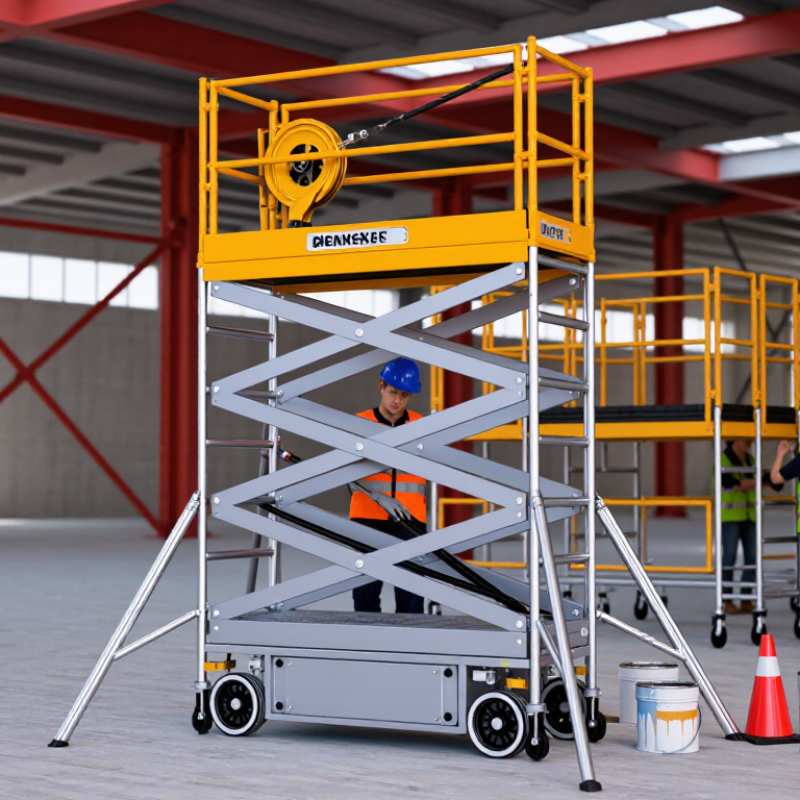
Crank-up scaffolding is a work platform that rises and lowers through a built-in mechanical system. Depending on its design, turning a hand crank moves screw jacks or a linked lifting mechanism. The platform travels up its supporting frames, then locks at the chosen height. No climbing with tools in hand. That is the practical appeal.
Before raising it, workers should check that the scaffold stands on firm, level ground and that its braces, wheels, and locking parts are secured. A few turns can change the platform height, but the movement should stay even on both sides. Watch for a corner lagging behind. Stop and inspect rather than forcing the crank. At working height, engage every required lock and keep within the platform’s stated load limit. Tools, materials, and people all count toward that limit.
The setup can make repeated height adjustments less awkward than rebuilding a fixed platform. Still, it is not a shortcut around careful assembly or inspection. Small details matter. A slightly sloped surface or a loose brace may be easy to miss during a rushed job. Follow the equipment instructions, and have a trained person check the setup before use.
Key Components and Features to Compare in 2026
Key Components and Features to Compare in 2026
A crank-up scaffold should feel stable before it feels convenient. Compare frame material, weld quality, and the locking points that hold each section in place. Check the crank and lifting mechanism for smooth movement, clear markings, and a secure brake or lock. A crank that sticks during a showroom demonstration may be more troublesome under real working conditions.
Look closely at the platform. It should sit level, resist slipping, and provide enough room for the worker and tools without crowding. Guardrails and toe boards help reduce fall and dropped-object risks when fitted and used as directed. Check caster size, wheel brakes, and any stabilizers or outriggers. Small wheels can struggle over rough floors. That detail is easy to overlook.
Compare the scaffold’s rated capacity with the combined weight of people, tools, and materials. Confirm the working height suits the task, and review the manufacturer’s instructions for assembly, inspection, and use. Specifications do not tell the whole story; a sturdy-looking frame is not proof of safe performance. I would compare actual measurements and inspection records, not rely on appearance alone. Details matter.
How to Choose the Right Scaffold for Your Worksite
What Is the Best Crank Up Scaffolding in 2026?
How to Choose the Right Scaffold for Your Worksite
The best crank-up scaffold is the one that fits the task, crew, and site conditions. Start with the working height, not the platform’s maximum reach. Measure where the work will happen, then allow room for a comfortable stance and tools. Too much height can make a setup awkward. Too little means repeated repositioning.
Check the platform’s rated capacity against the combined weight of workers, tools, and materials. Confirm that the frame, guardrails, access points, and locking parts suit the work planned. Inspect the crank and moving components before use. They should operate smoothly, without visible damage or loose connections. Follow the manufacturer’s instructions and applicable site procedures.
Ground conditions matter. A level concrete floor is different from a sloped or uneven surface, and not every scaffold is suitable for every location. Check the base dimensions, wheel locks, and leveling provisions before bringing equipment onto the work area. It is tempting to choose the tallest model for flexibility; that can be the wrong trade-off. A compact unit may fit better around doorways, stored materials, or tight indoor spaces. Leave room to move safely. Reassess the setup if the task, crew, or surface changes.
Safety Standards and Setup Practices to Check
When comparing crank-up scaffolding, check the safety system before the lifting mechanism. In the United States, OSHA’s construction scaffold standard requires platforms to support their own weight and at least four times the maximum intended load. Workers more than 10 feet above a lower level generally need guardrails or personal fall-arrest systems, subject to specific standard provisions. OSHA estimates that scaffold incidents cause about 4,500 injuries and 50 deaths each year. These figures make routine checks more than paperwork.
Set the scaffold on firm, level ground, using base plates and mudsills where needed. Confirm that braces, ties, platforms, guardrails, and access points are secure before raising it. A competent person should inspect the scaffold before each work shift and after any event that could affect its integrity. Check crank locks and lifting components, too; uneven movement can signal a problem. Keep materials within the platform’s rated capacity, and follow the manufacturer’s setup instructions. Small details matter.
One point deserves a second look: a scaffold can appear level while one support rests on soft soil. Recheck the base after rain or ground disturbance, and keep workers clear during adjustments. OSHA’s requirements provide a baseline, not a substitute for site-specific judgment. Even an experienced crew can miss a change in ground conditions.
How Leading Crank-Up Scaffold Options Differ in 2026
In 2026, the best crank-up scaffold depends less on a headline feature than on the worksite. Compact manual models suit short indoor tasks, such as changing fixtures beneath a low ceiling. Taller systems may offer more reach, but need careful attention to base width, rated load, and the surface beneath them. A larger platform is not automatically better.
Leading options differ in lift range, platform size, adjustment effort, and ease of moving between work areas. Compare the rated capacity with the combined weight of workers, tools, and materials, using the product documentation rather than a guess. Check that the crank moves smoothly and that locking parts are easy to inspect. Small details matter. A stiff handle can slow repeated adjustments, while bulky frames may be awkward through narrow doors. Before work, follow the manufacturer’s setup instructions and have the assembled scaffold checked by a trained person. A taller frame can look efficient on paper, yet feel less practical in a crowded room. That trade-off deserves a second look.
What Is the Best Crank-Up Scaffolding in 2026?
How leading crank-up scaffold options differ by common scaffold duty rating
Common scaffold duty classifications are light (25 lb/ft²), medium (50 lb/ft²), and heavy (75 lb/ft²). These are load-rating categories, not ratings for specific crank-up models. Check the manufacturer’s rated capacity and applicable safety requirements before choosing a scaffold.